Posts in Category: Our wanderings
Today’s hike: Oregon Dunes
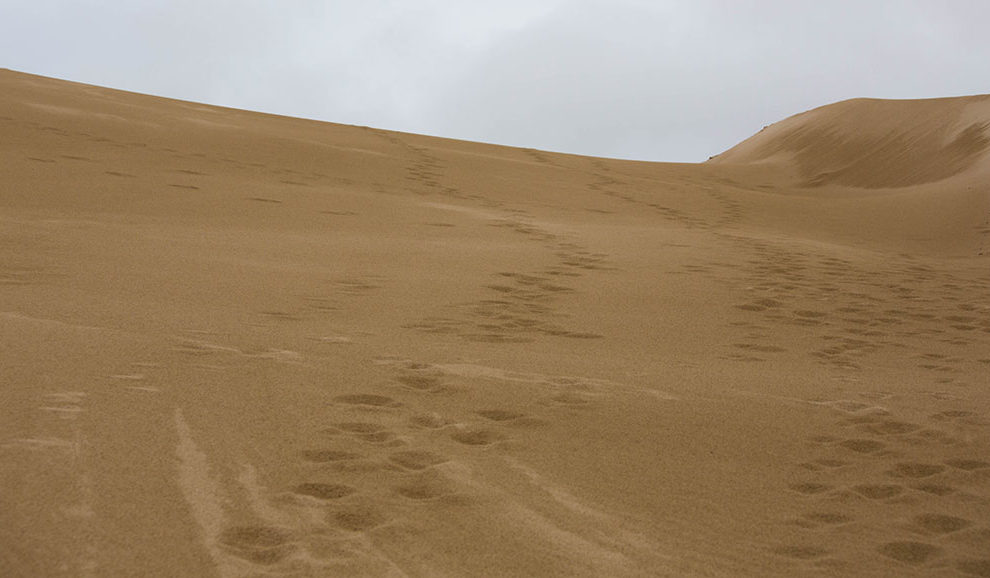 Footsteps heading up the dunes.
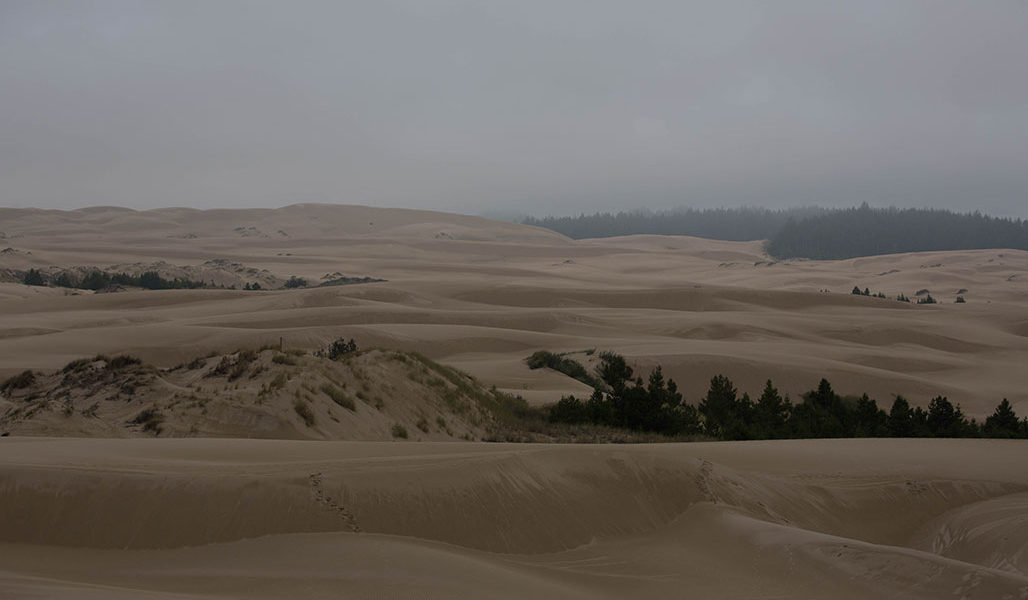
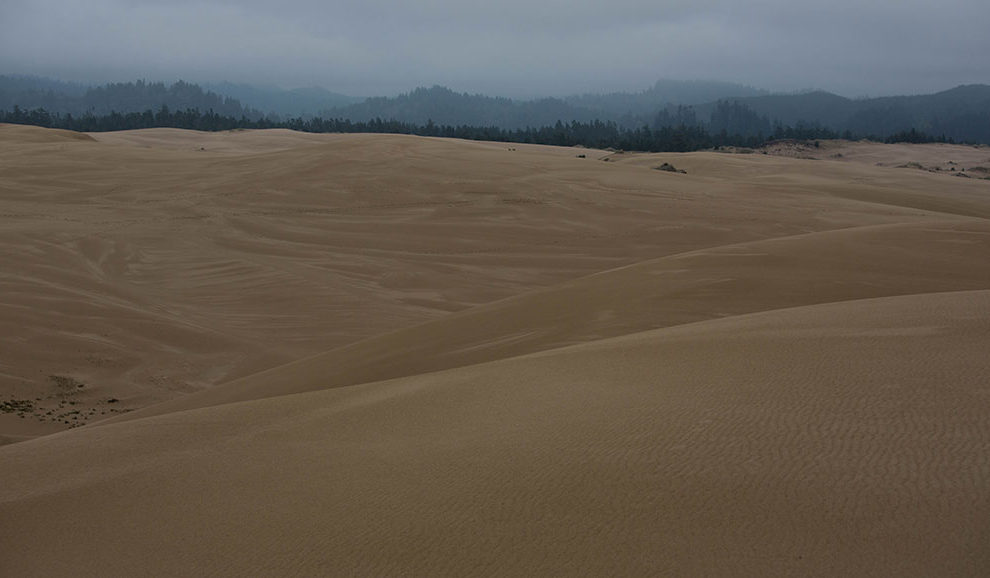
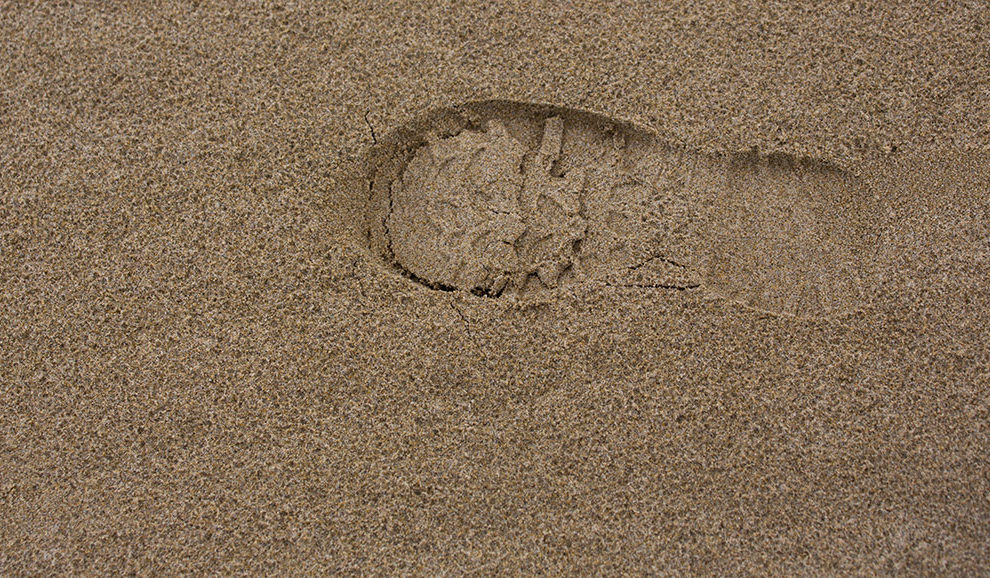
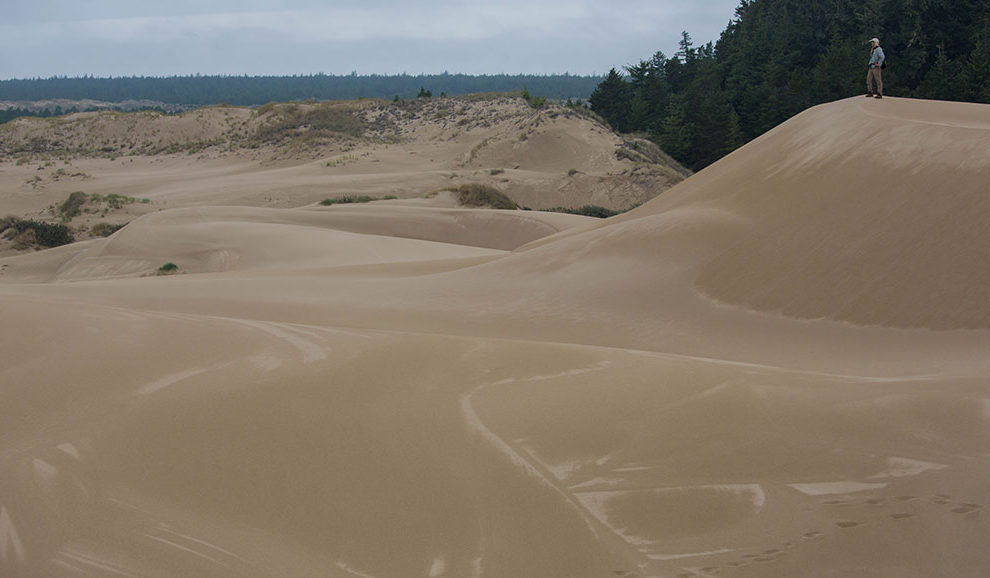
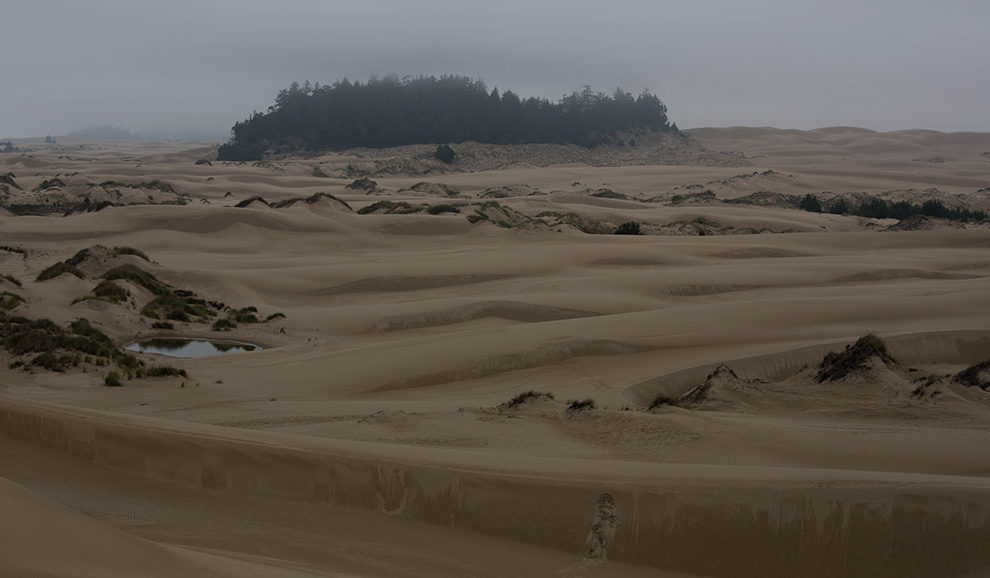
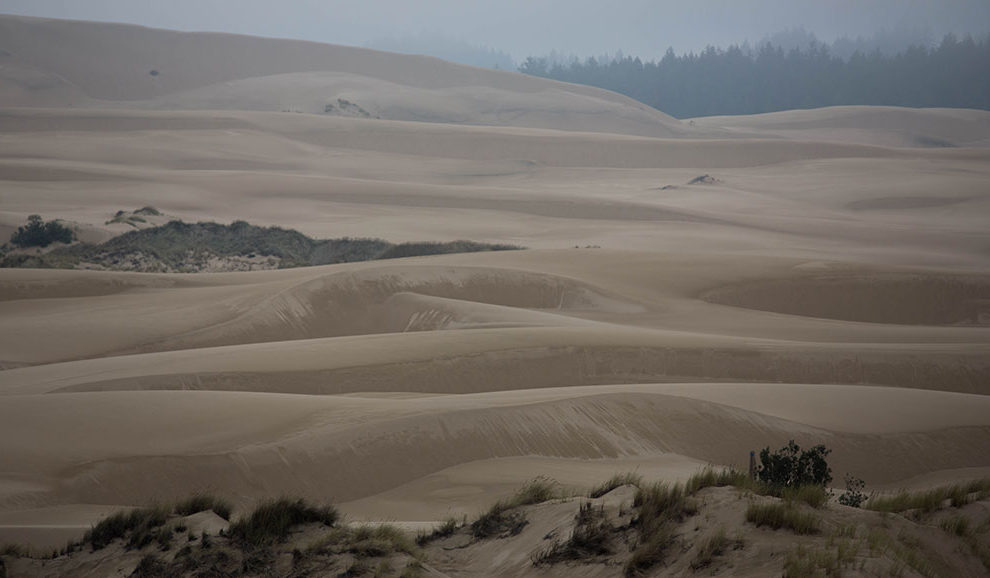
The Oregon Dunes, the largest expanses of temperate coastal sand dunes in the world, stretch 40 miles along the Oregon coast between Florence and Coos Bay. They rise nearly 500 feet above the ocean and were designated a National Recreation Area in 1972.
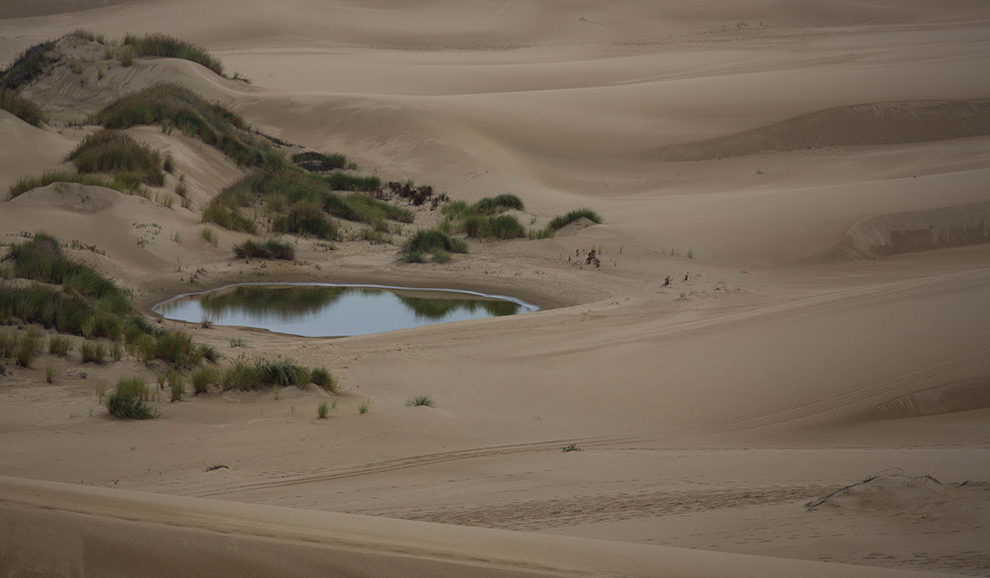
Imported European beachgrass has created a foredune along the ocean. Behind it, winds create a deflation plain, scouring sand down to the water table and providing tiny oases for plants and animals. Transverse dunes, or ripples on the dune surfaces, are created by shifting summer winds. The largest dunes, called oblique dunes, can be as tall as 180 feet and move inland three to 16 feet each year. Parabola dunes interact with the surrounding forest, sometimes losing ground to the trees, sometimes smothering them, and sometimes leaving pockets of forest called tree islands.
We headed toward the dunes on the John Dellenback Dunes Trail near Eel Creek Campground. The trail meanders about one half-mile through lush rhododendrons, madrone and pines before opening onto the oblique dunes.
A brief rain the night before stabilized the sand and gave us good footing as we climbed to the ridge of the highest dune. We wandered along its curving edge about a mile toward a tree island. If you continue another couple of miles, you can hike all the way to the beach.
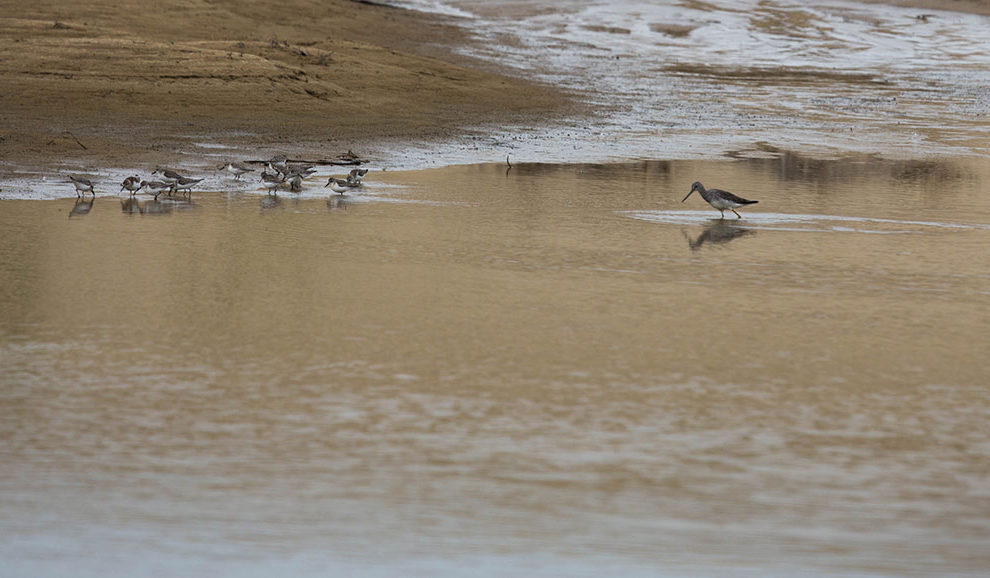
We saw shorebirds wading and feeding in pockets of water in the deflation plain, as fog rolled in over the trees at the edges of the dunes.
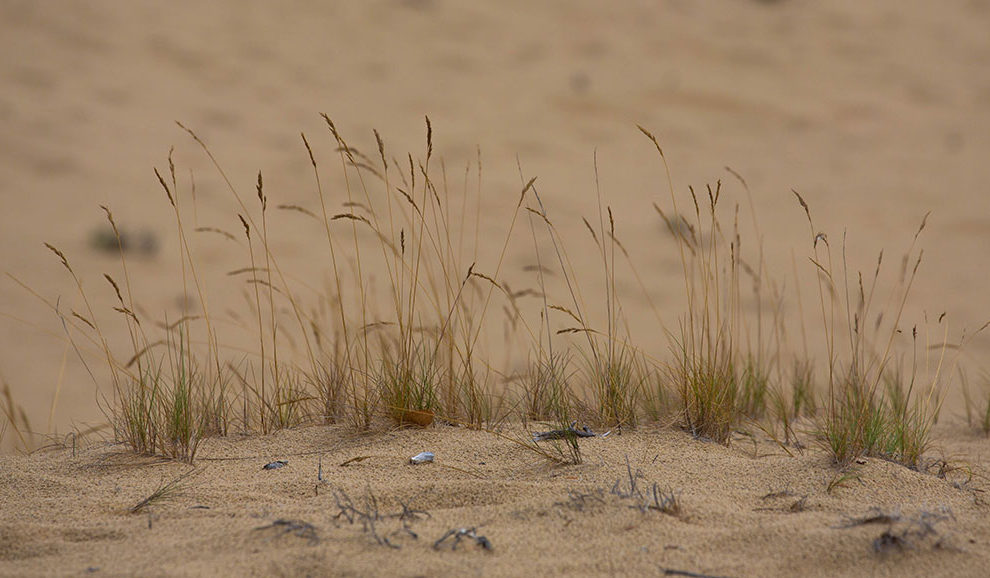
On our way back, we saw red fescue, described as “globally significant” and in need of protection. Signage notes that, although individual red fescue plants are common, “95 percent of red fescue communities are gone,” lost to competition from invading plants, like European beachgrass.
The Epic Van’s road is paved with pages of text
 Some of the books we've just finished, which will be handed out to people who cross our path.
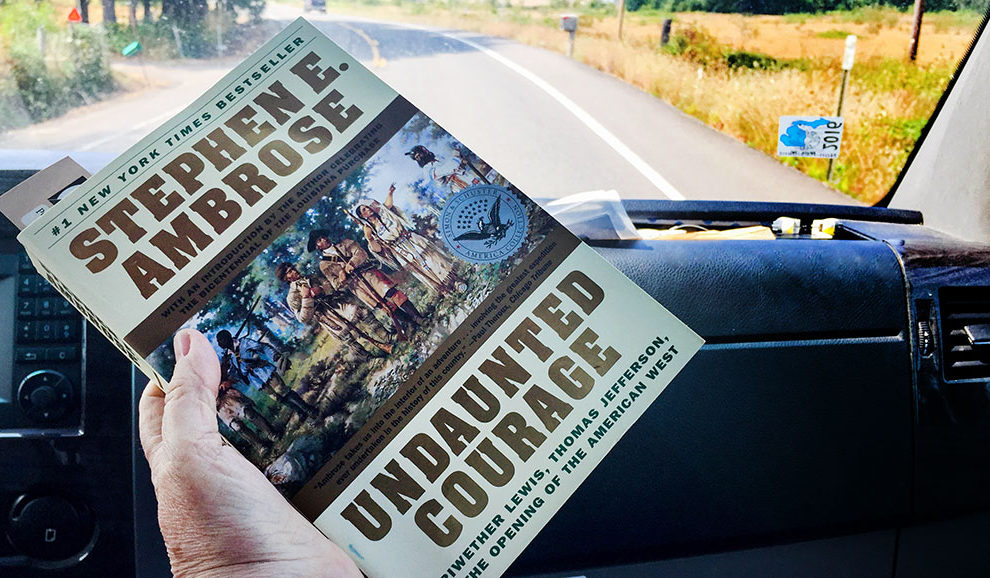



Books. How could you live without them?
Tom and I both love to read, and life in The Epic Van is rich in hours spent with books.
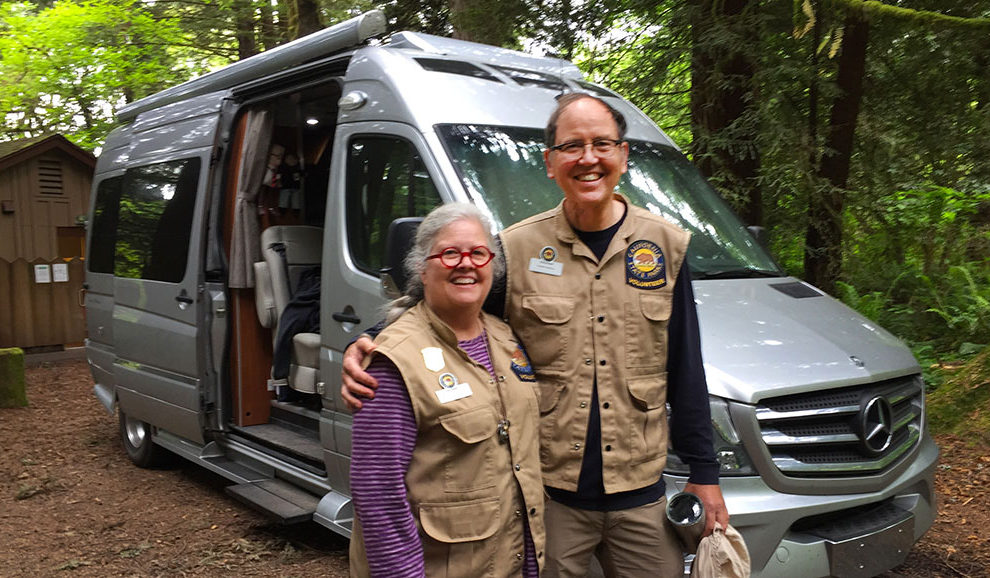
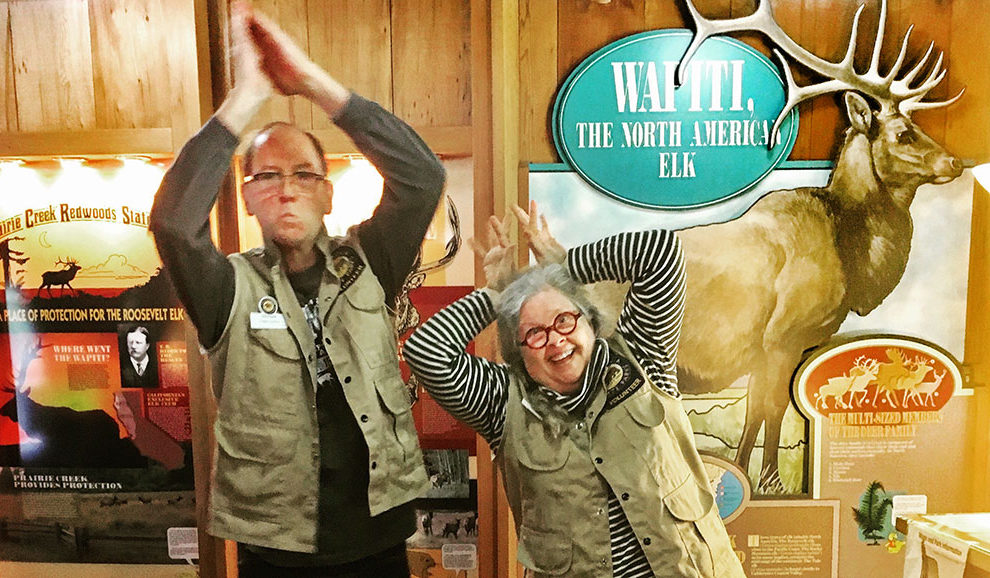
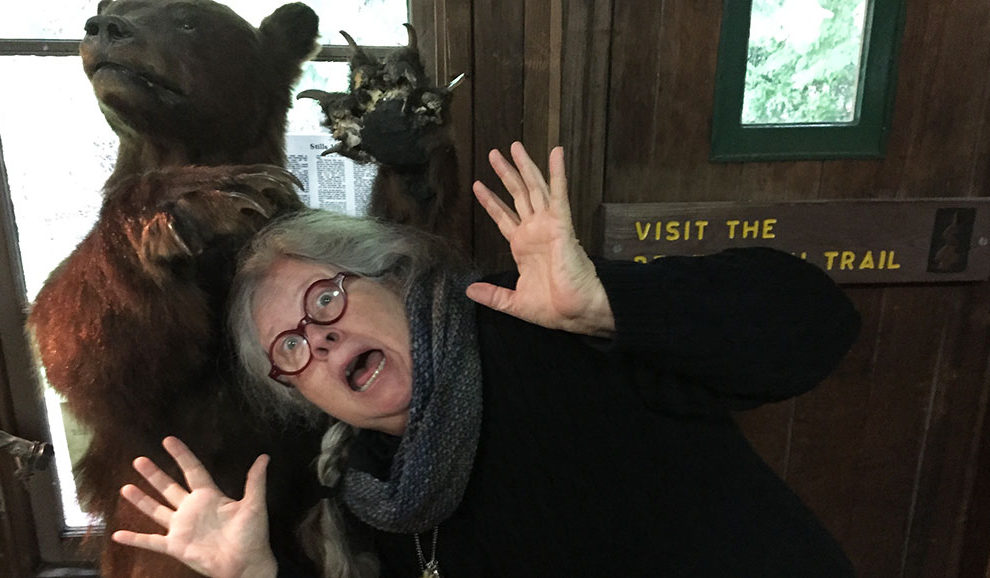
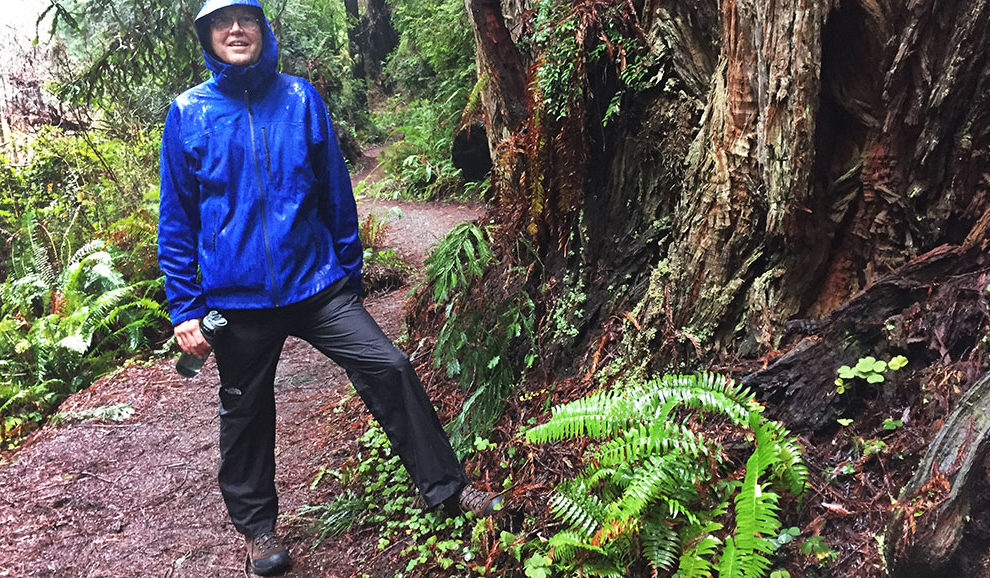
Back to the workplace in the redwoods
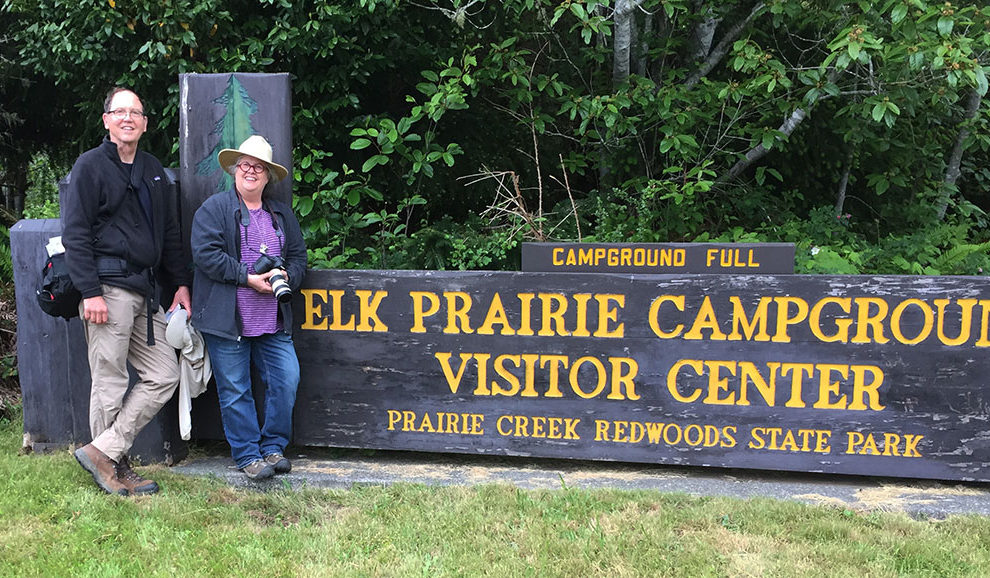 Tom and Judy standing by the sign at the entrance to Prairie Creek Redwoods State Park.
By Tom Nichols
After almost 2½ years of shirking, I went back to work as a volunteer.
The terms: Twenty hours of work each week, split with Judy, in exchange for a campsite with electricity, water and sewer. After two years of freestyle travel, we committed to spend March, April and May as information center volunteers at Prairie Creek Redwoods State Park, a U.N. World Heritage site about 40 miles north of Eureka, California. To upgrade our campsite from the maintenance area to a beautiful spot on Prairie Creek, we agreed to cabin hosting, which meant light housekeeping for four utilitarian units with bunk beds and living space but without kitchens or bathrooms.
Yellow Pine’s eclipse: Champagne, doughnuts, and inappropriate card games
 Umi's homemade doughnuts were a sweet start to the eclipse in Yellow Pine, Idaho.
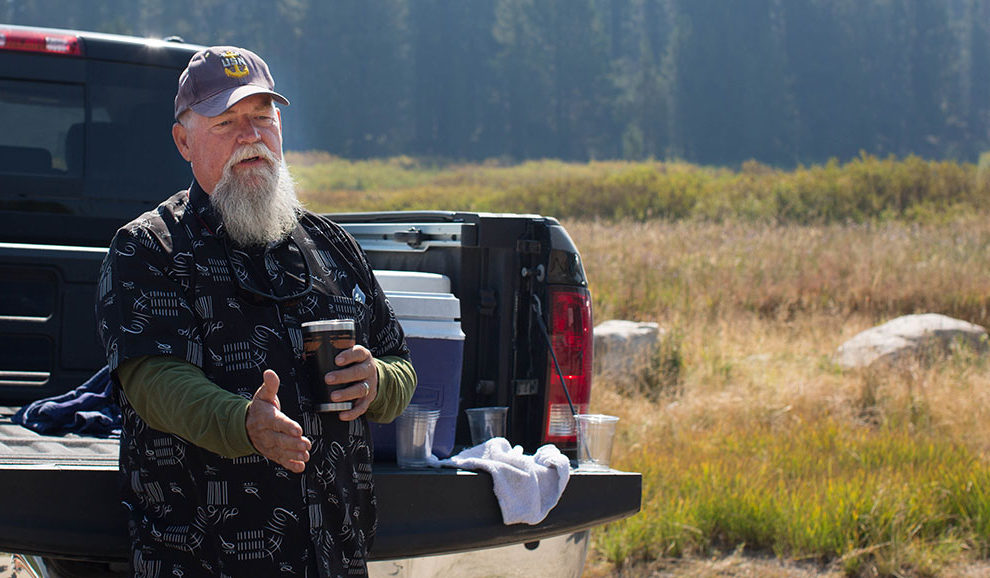

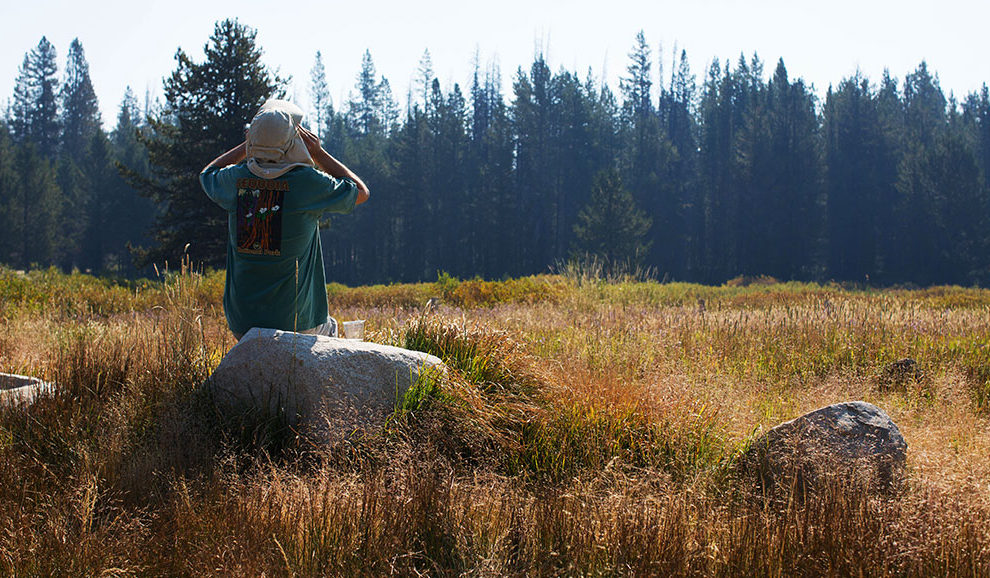

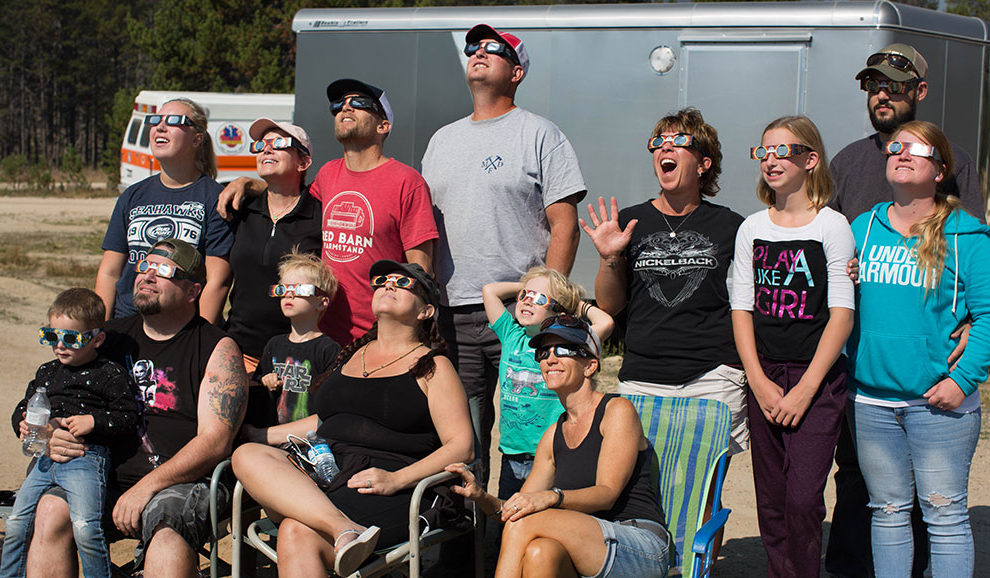
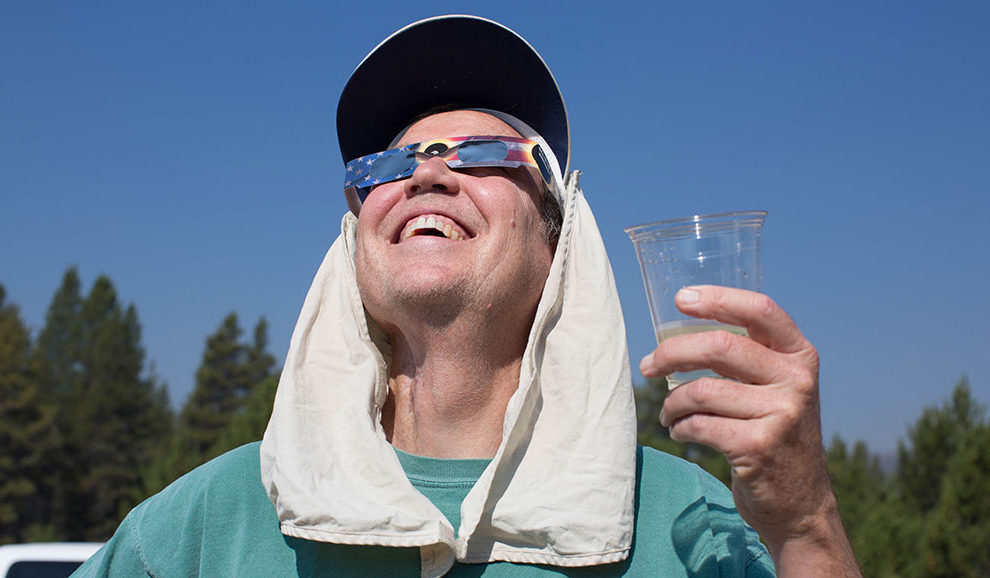
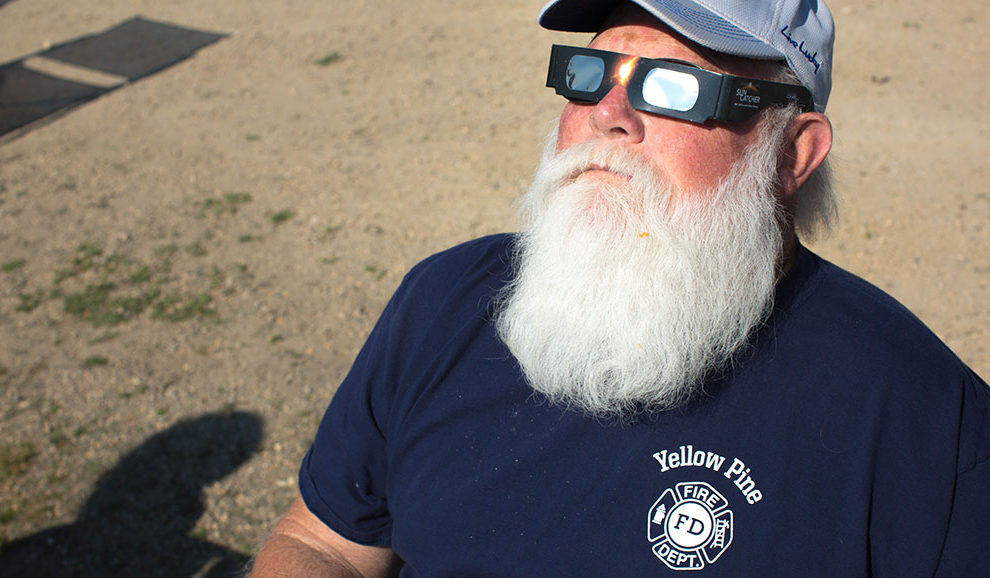
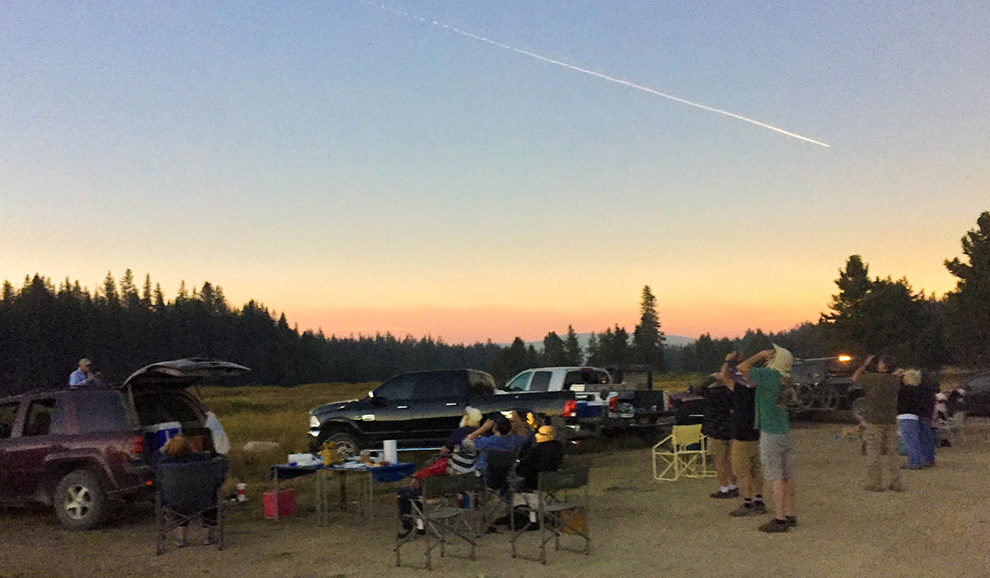
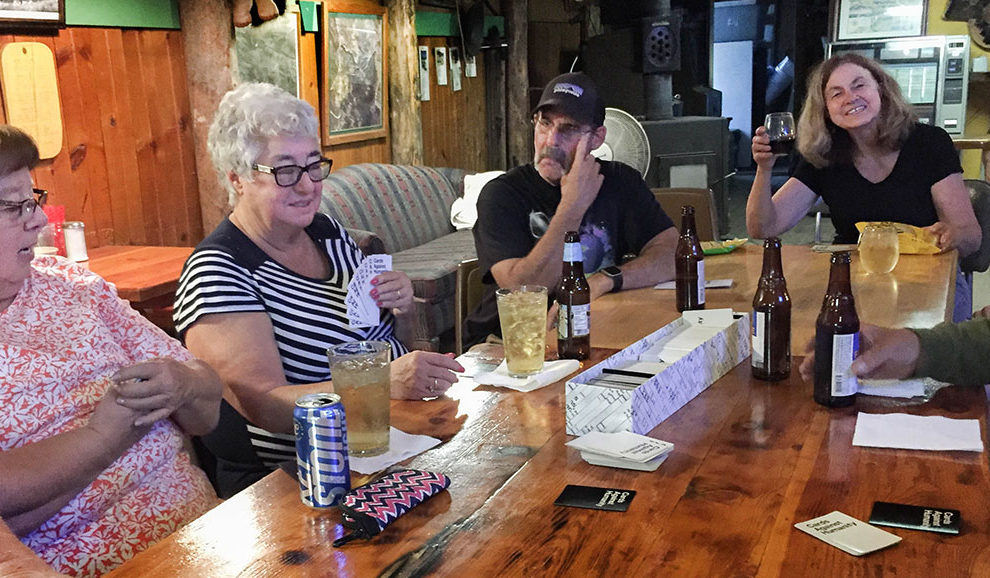
We ambled back from the Grand Tetons to Yellow Pine to watch the eclipse without crowds, and were rewarded with a perfect day.
Revisited: Mexican Hat Soup in the Redwoods
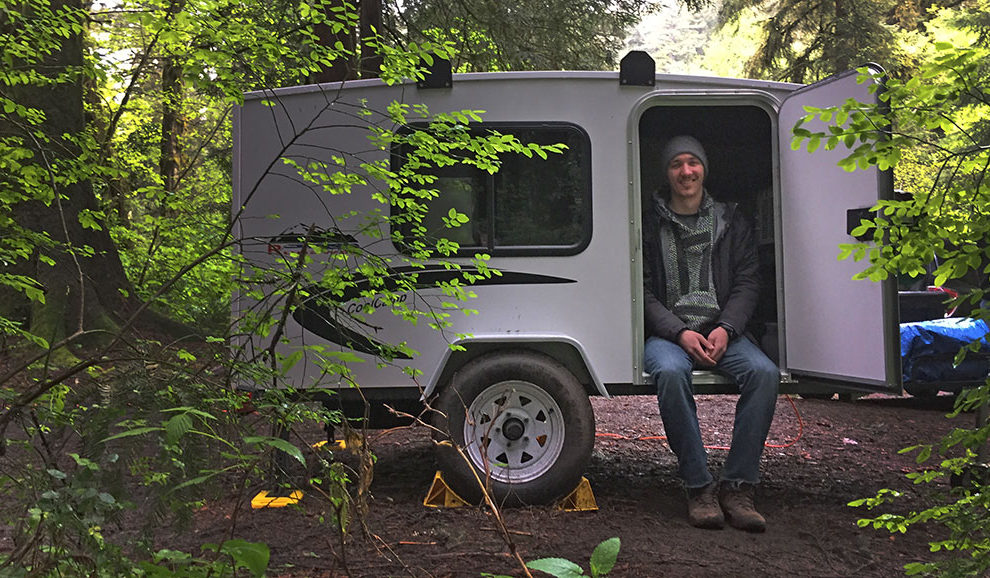 Corbin in his amazing lightweight camper.
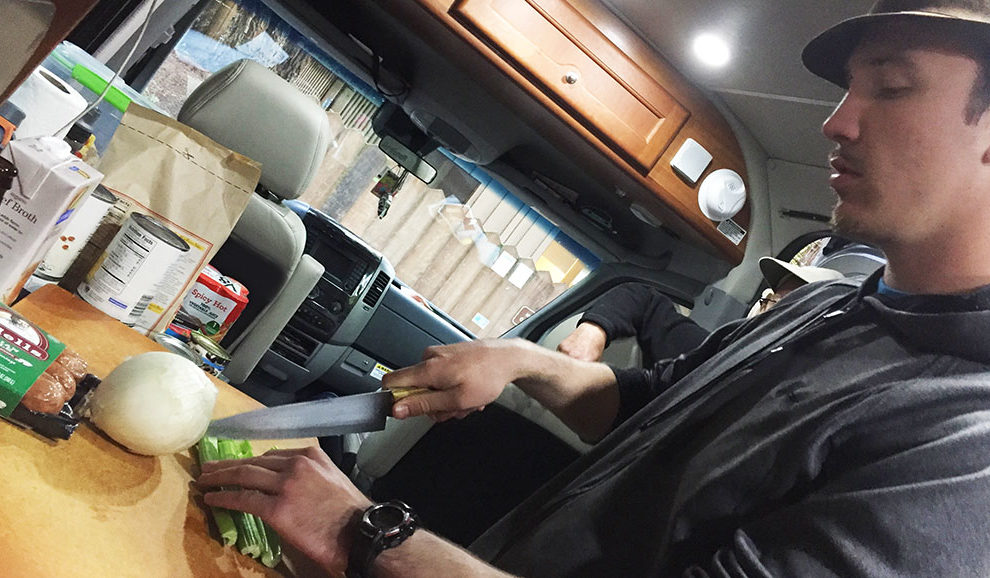




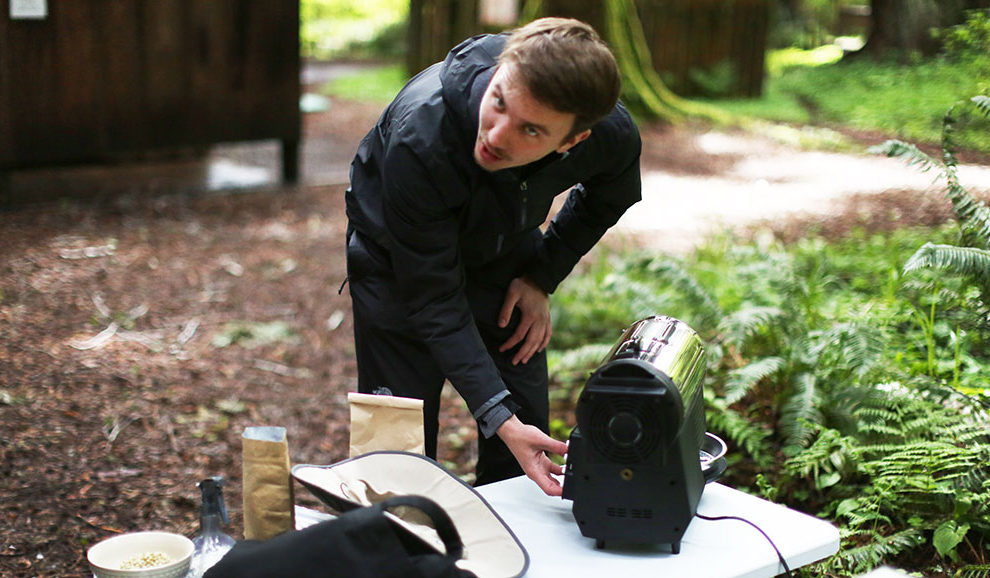
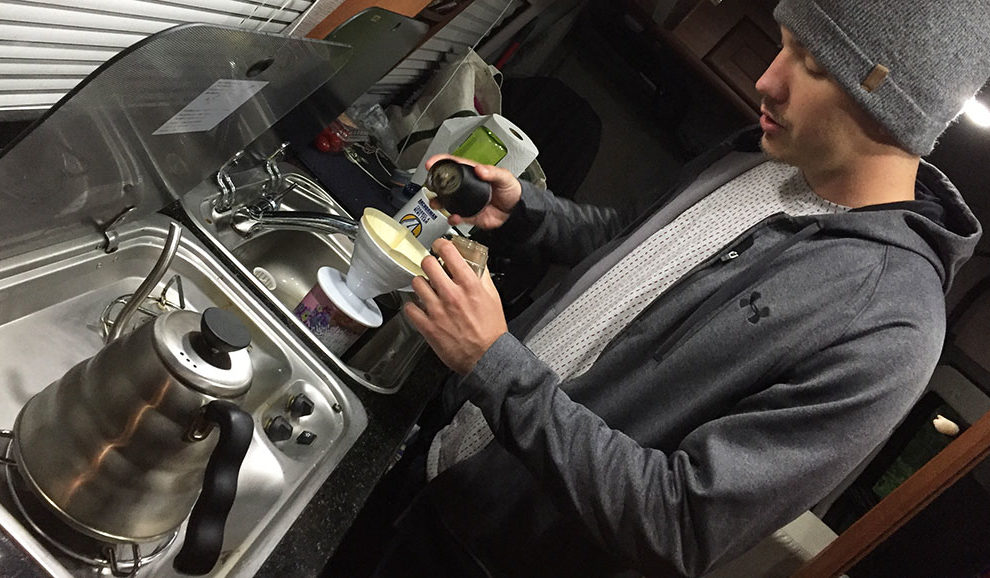

Editor’s note: Corbin, our son Nate’s college roommate and now a dear friend of ours, is the guest blogger today, discussing the amazing soup he made us when he visited. He also roasted coffee and made me a cup every morning (heaven). And he invented the famous campfire-toasted peeps, which shall live in infamy. Enjoy!
By Corbin
Back in April, I had the great pleasure of dropping in to the redwood forest to see Tom and Judy, a.k.a. the New American Nomads, for a 10-day stay. I brought my little Runaway camper and set up in the “front yard” of their spacious campsite to weather the mists and rain with a couple of my favorite people in one of the most amazing places on Earth.
As Judy has already written about on this site, we had some fantastic dinners by the campfire, reminisced about life over excellent beer, and generally had a grand time in the Epic Van and around the North Coast.
Tom, ever the mobile gourmet, prepared a number of astoundingly delicious and complex meals in the small kitchen of the Roadtrek, much to my amazement. We also had bratwurst and grilled veggies from the campfire, along with the now famous Roasted Peeps with Reese’s Peanut Butter Eggs.
As the amount of hospitality shown to me by the Nichols grew and grew, I wanted to offer a small token of appreciation in return, and it came to me instantly: my great grandmother’s Mexican Hat Soup.
Yellow Pine: Now you know about it, forget it
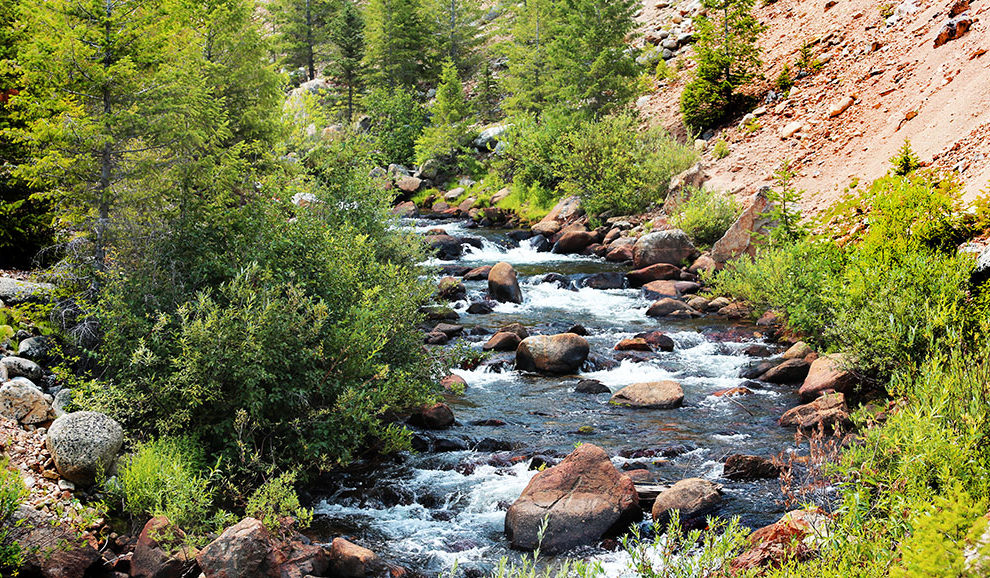 The beautiful view on the road into Yellow Pine, Idaho.











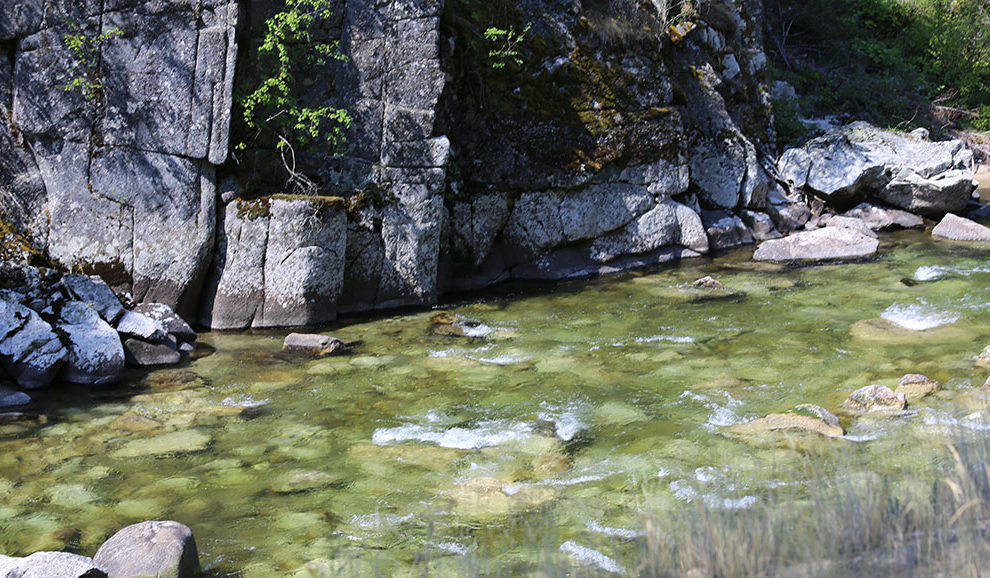
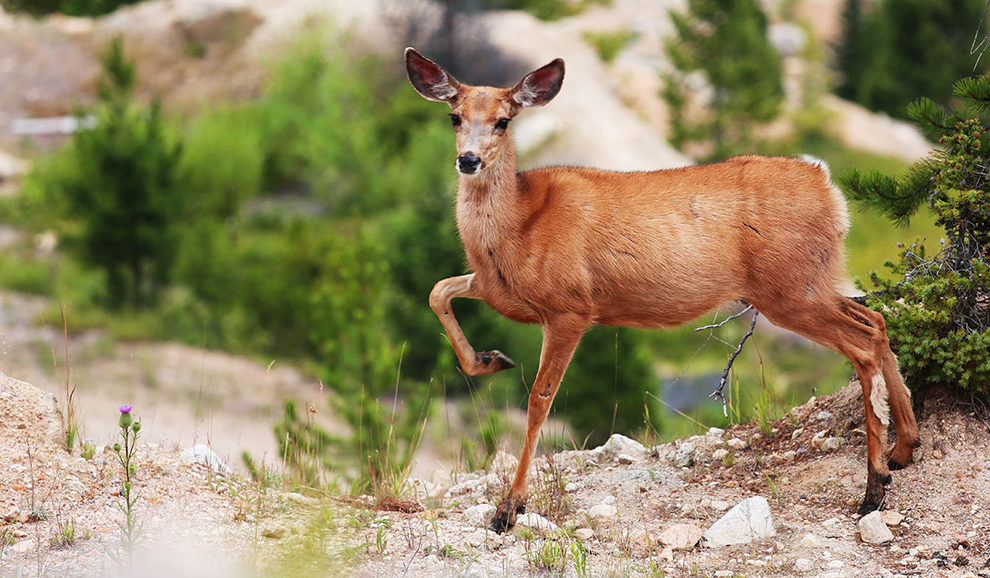
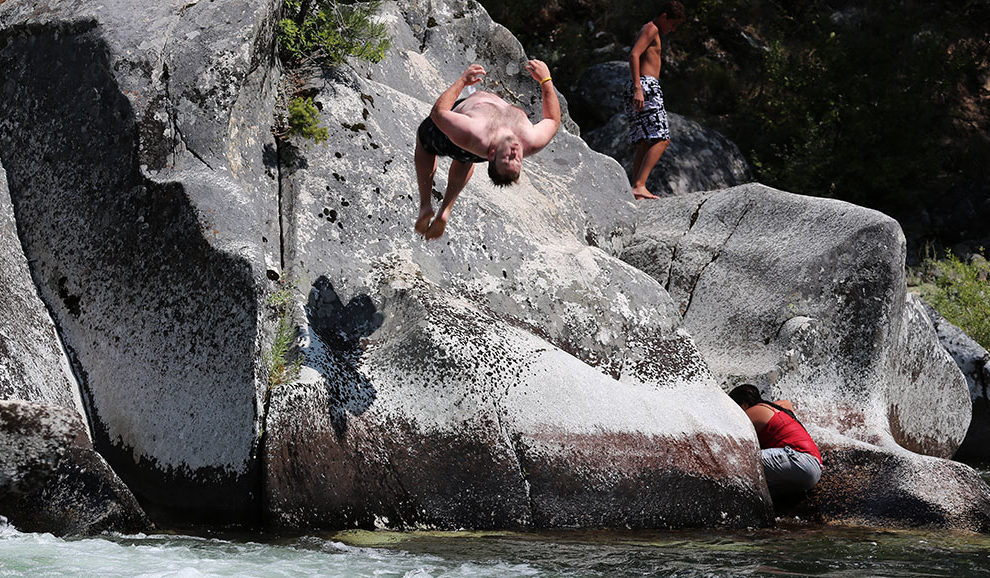
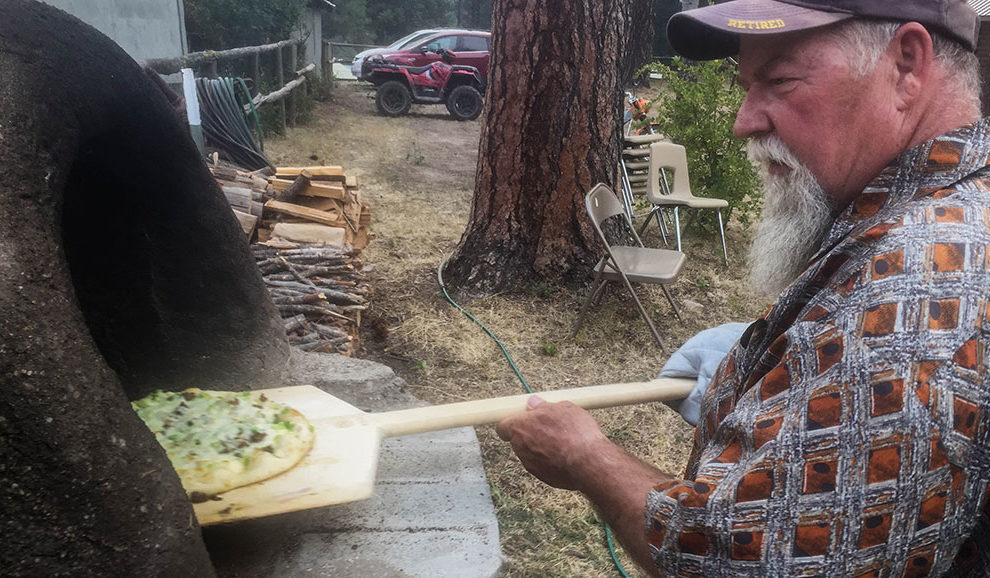
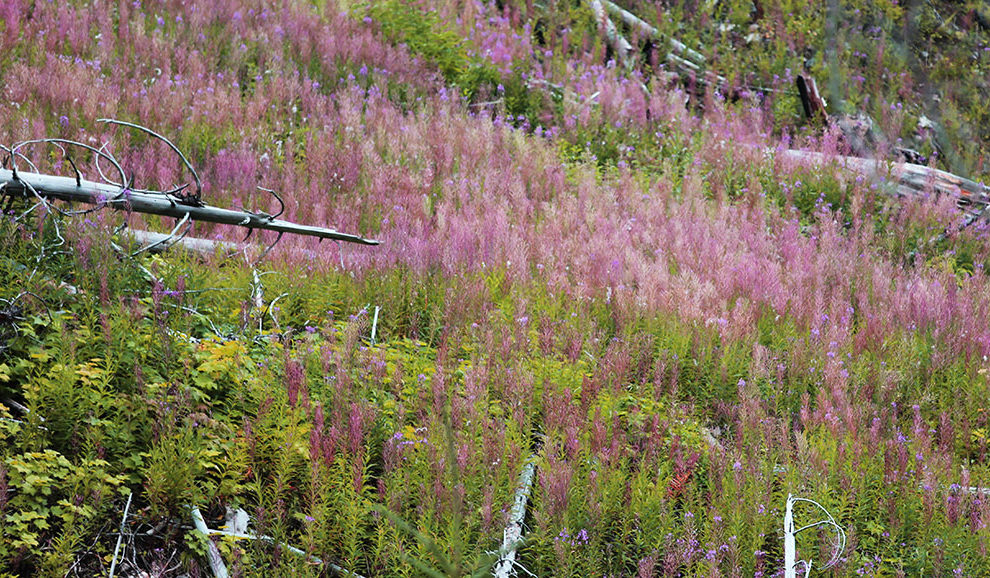
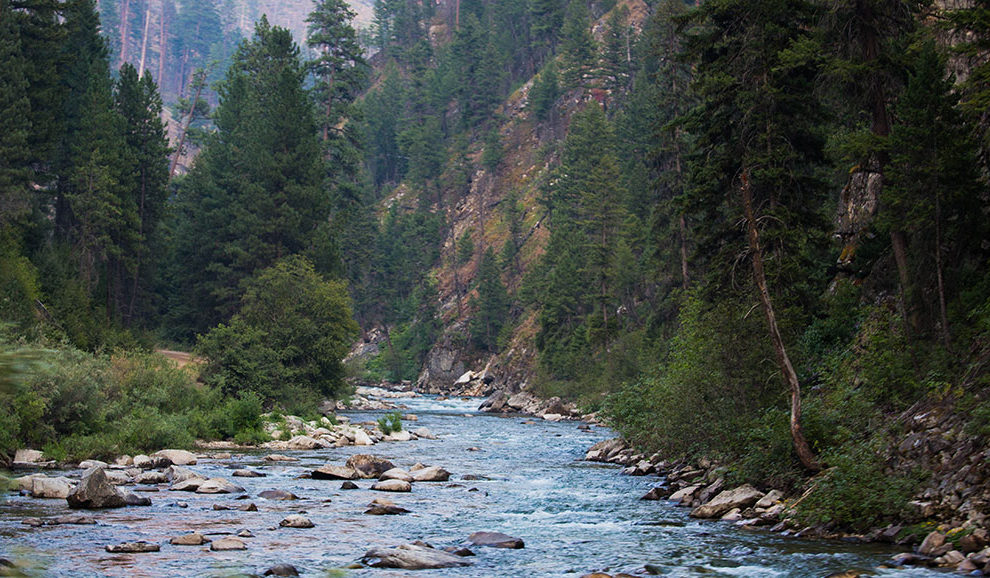
I’m going to tell you about a place I love, and then I’m going to tell you to forget about it. Well, maybe not altogether, but mostly. Because, like Boo Radley, exposing it to too many people might kill it.
Yellow Pine, Idaho, population about 40, sits on the East Fork of the South Fork of the Salmon River, at the end of a 32-mile, one-lane, paved road, then about 15 miles of unpaved road.
Today’s hike: Taggart Lake-Beaver Creek loop
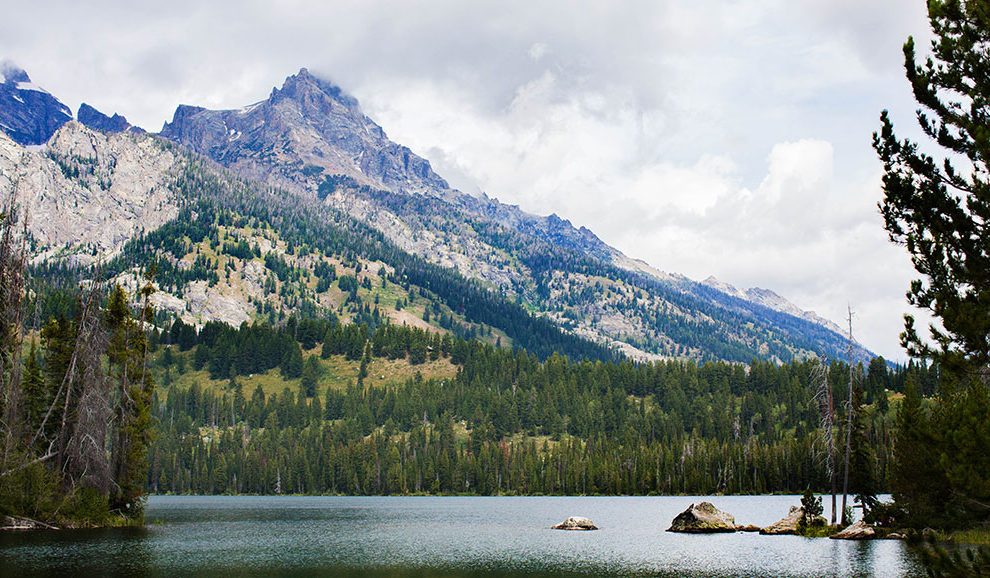 Taggart Lake is a pristine glacial lake in Grand Teton National Park.
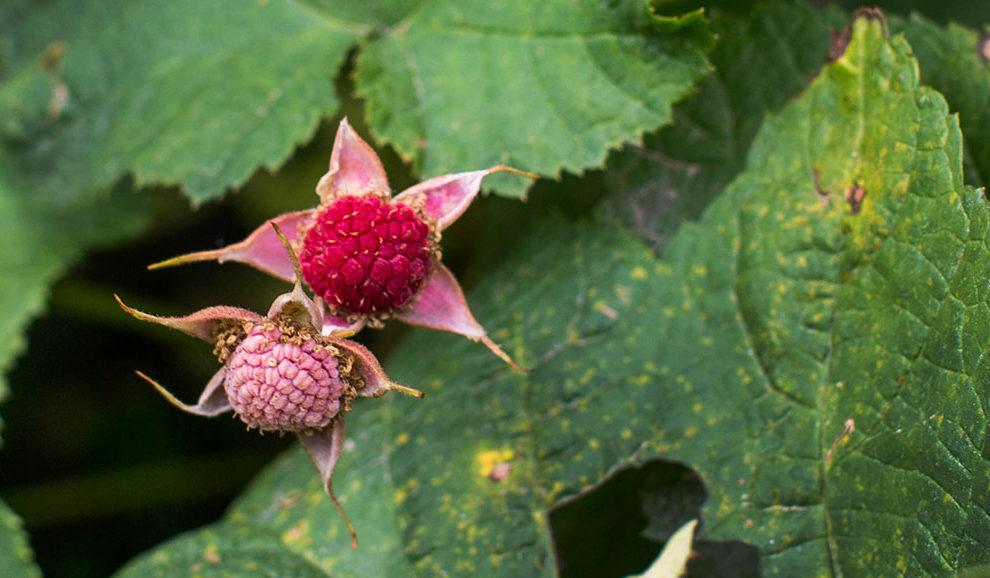
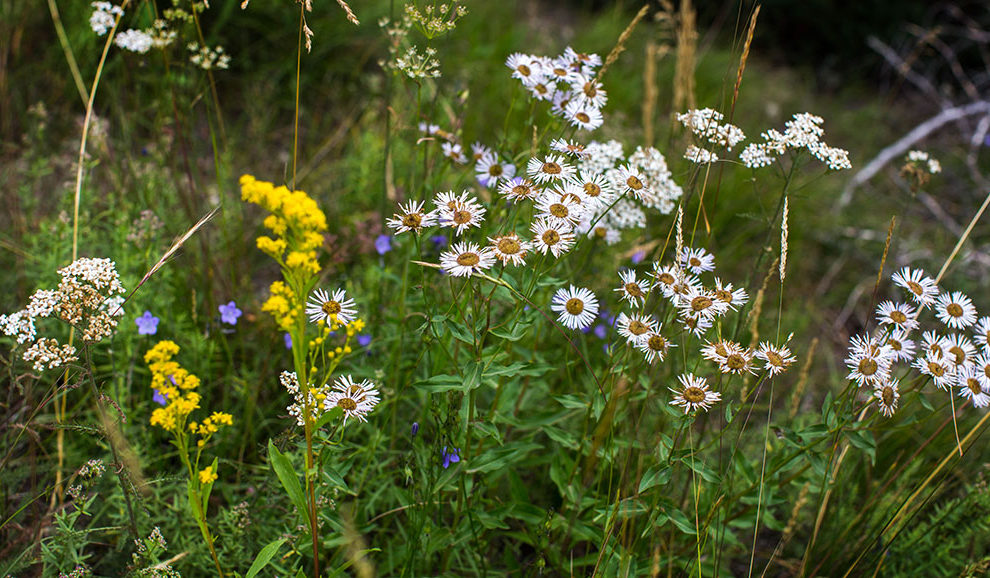
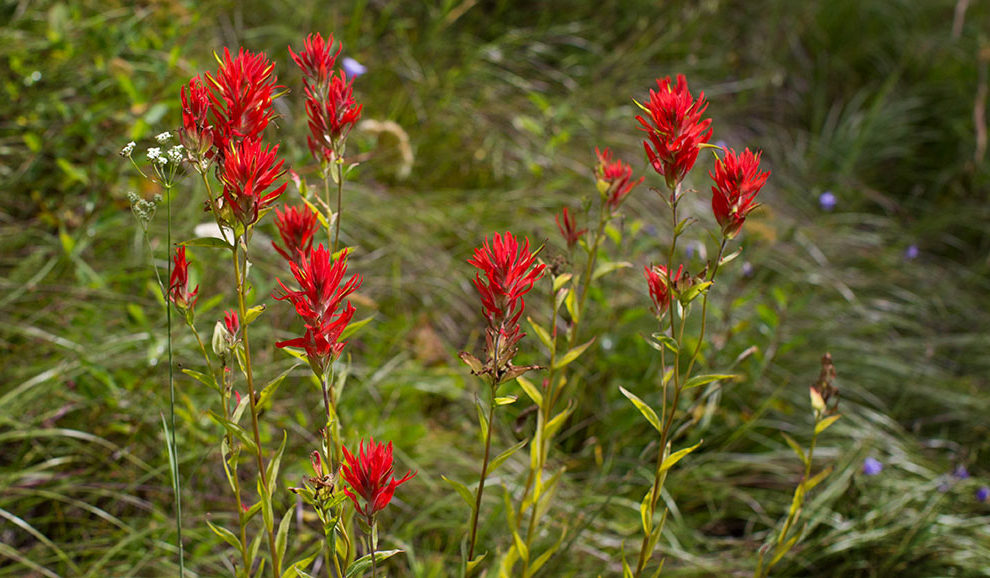
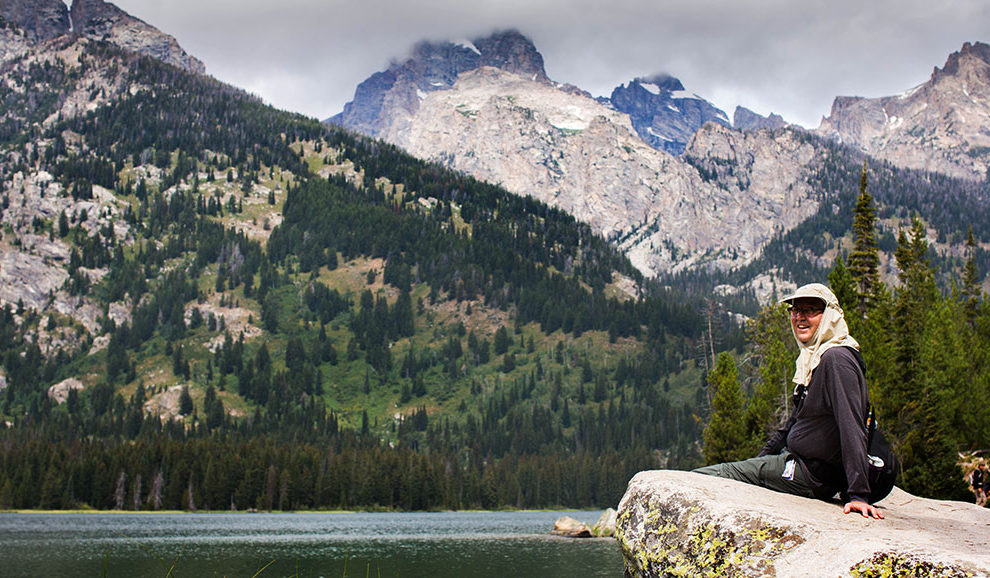
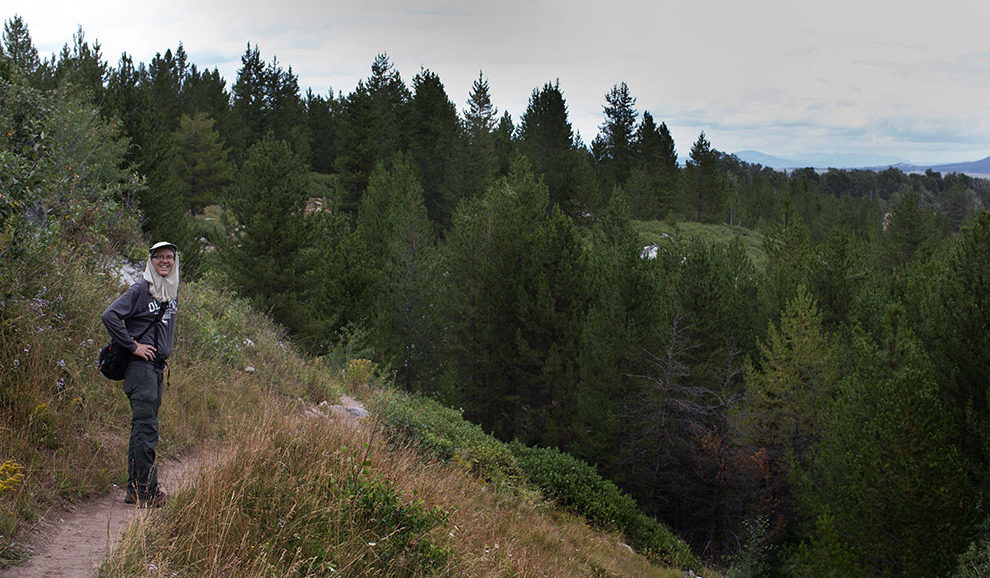
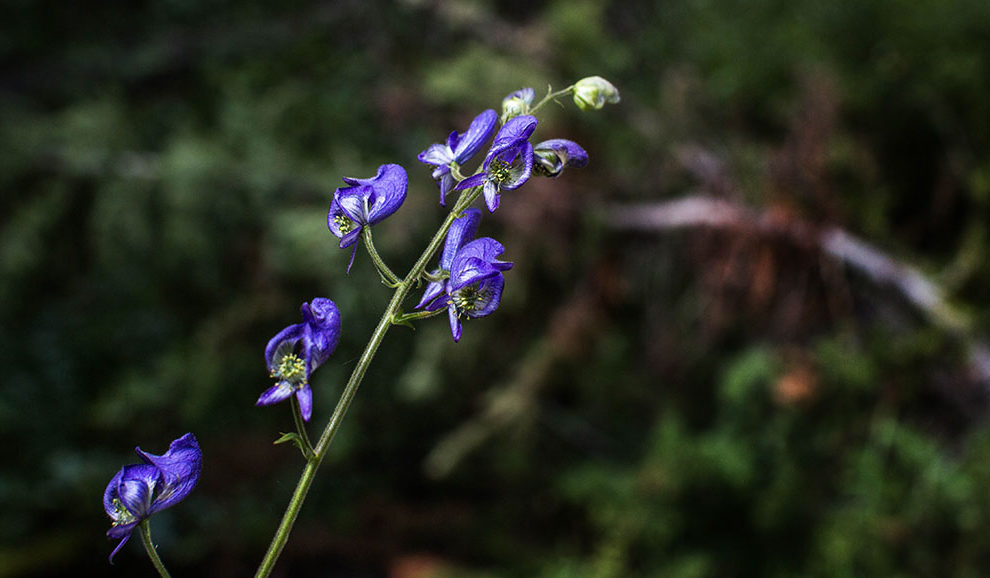
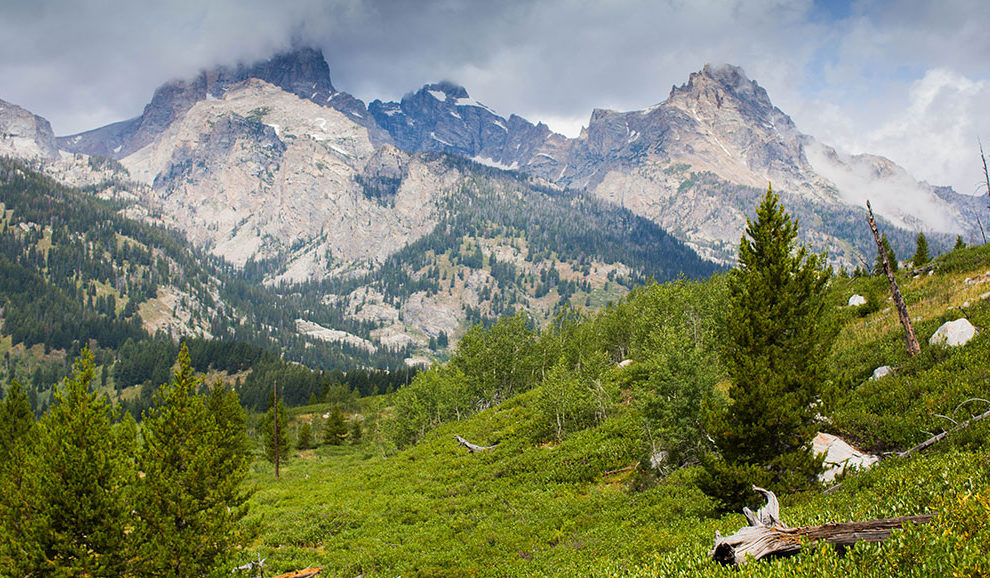
Today, we hiked to Taggart Lake, one of the pristine glacial lakes in Grand Teton National Park.
The lake, at 6,902 feet, was formed by a glacier that flowed out of Avalanche Canyon, scooping out the basin and forming lateral moraines, or piles of rock and soil, along its sides. When the glacier retreated, water was trapped within the moraines.
From the trailhead, the path climbs next to a creek, through sagebrush flats and a recently burned area, for about two miles to reach the lake.
Capitol Reef National Park: Utah’s cascading barrier, oasis
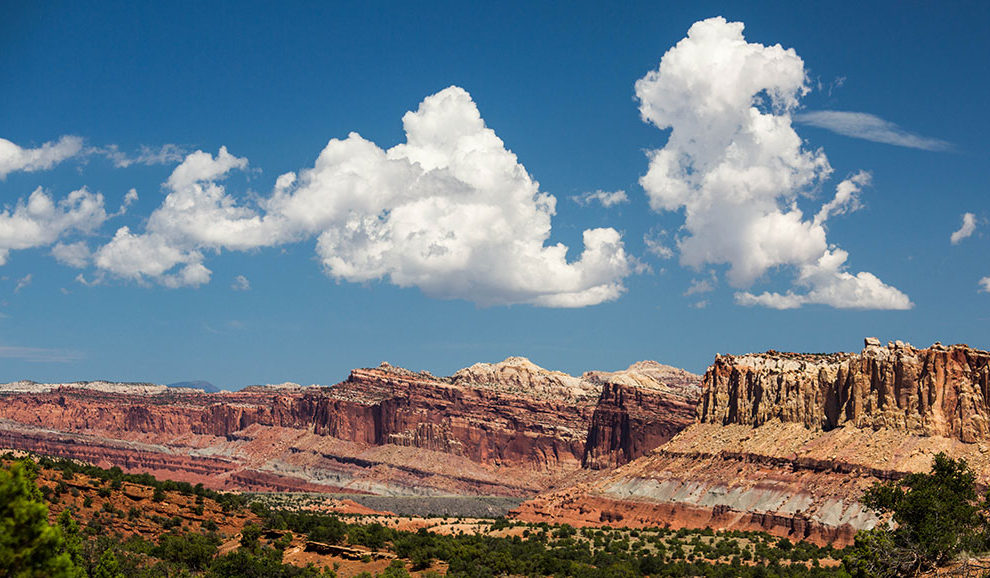 The Waterpocket Fold in Capitol Reef National Park was a formidable barrier to travelers.
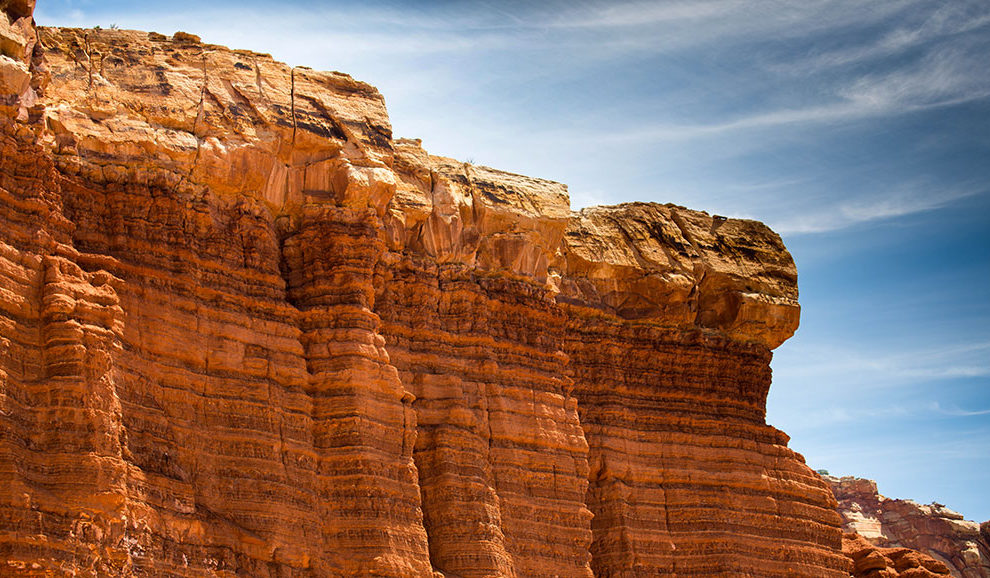
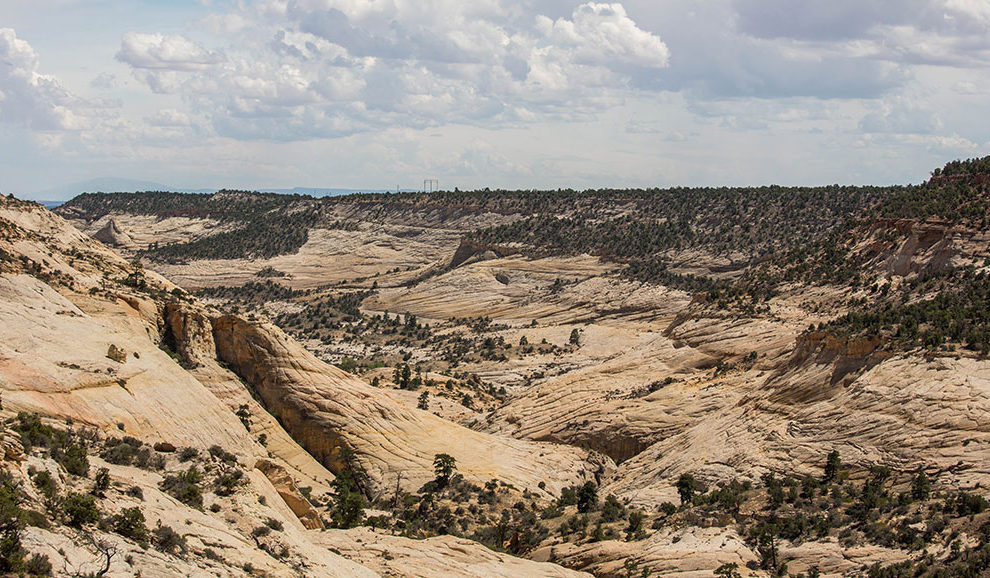
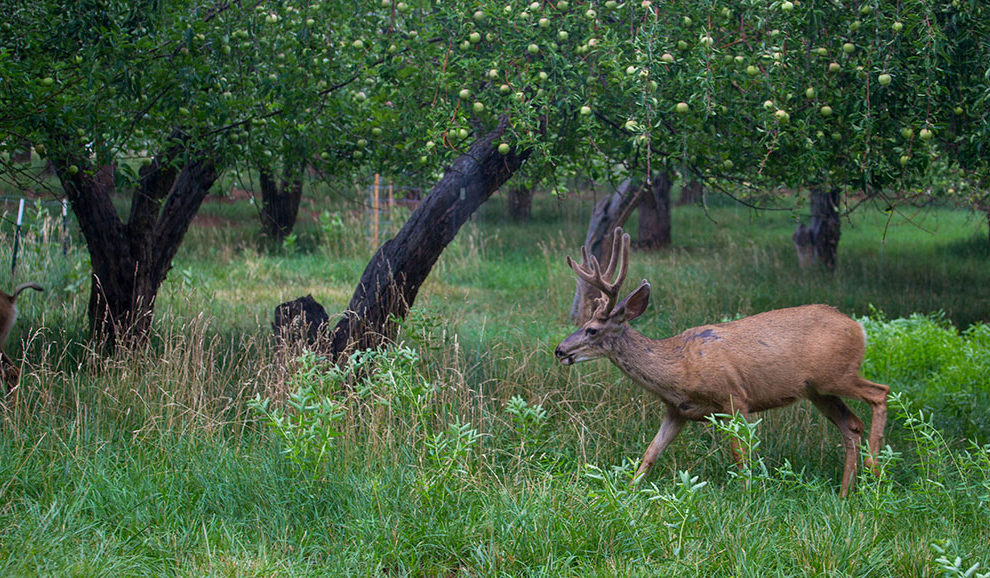
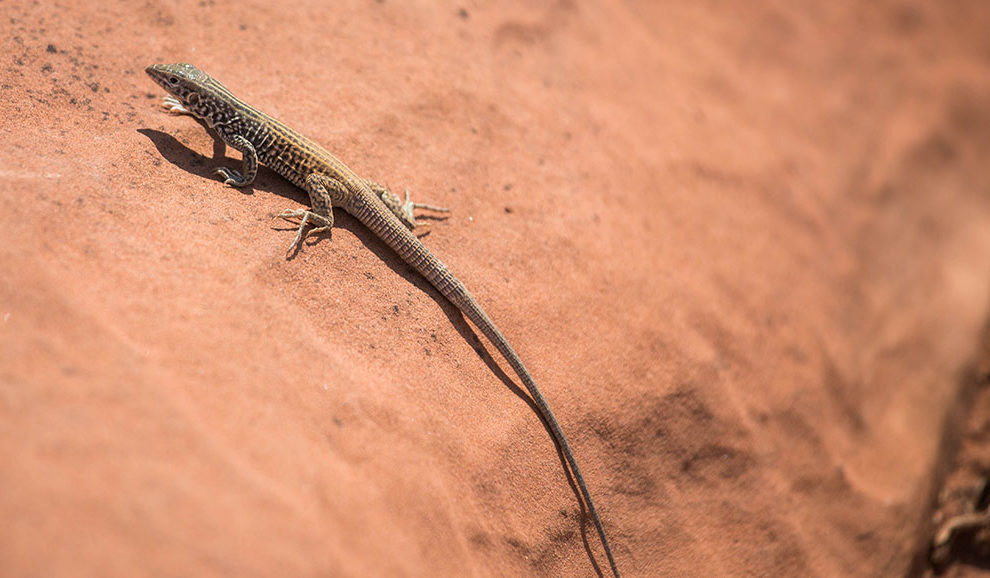
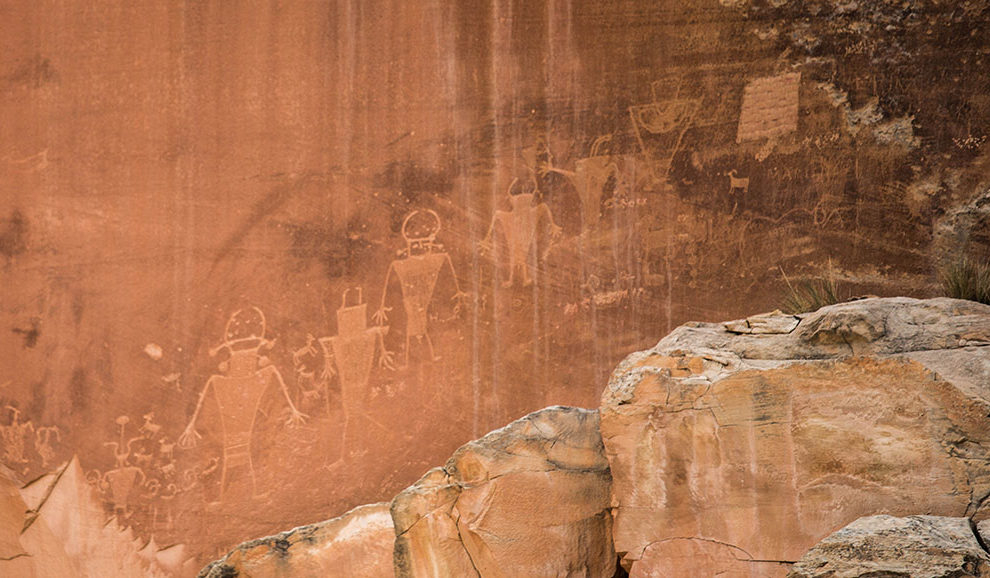
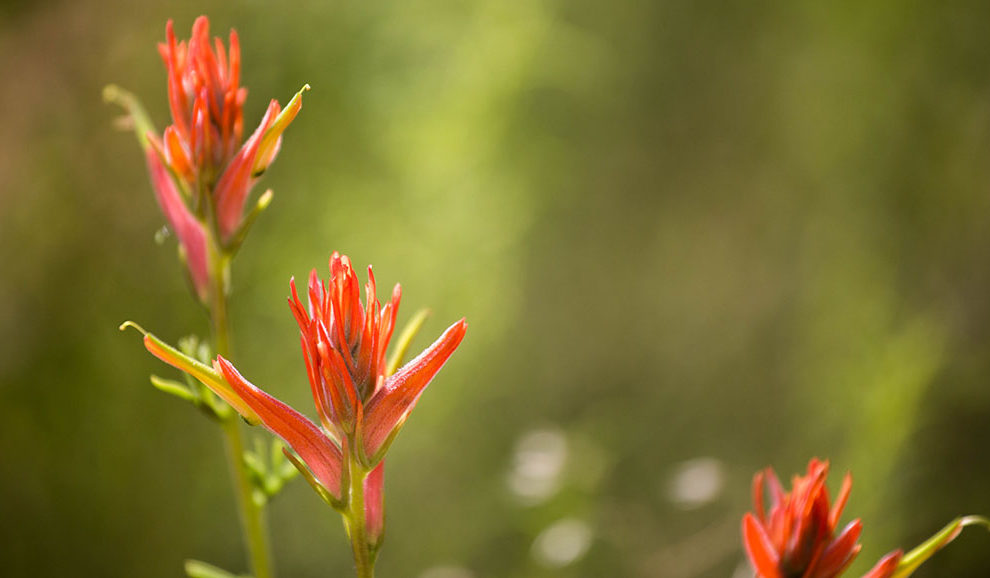
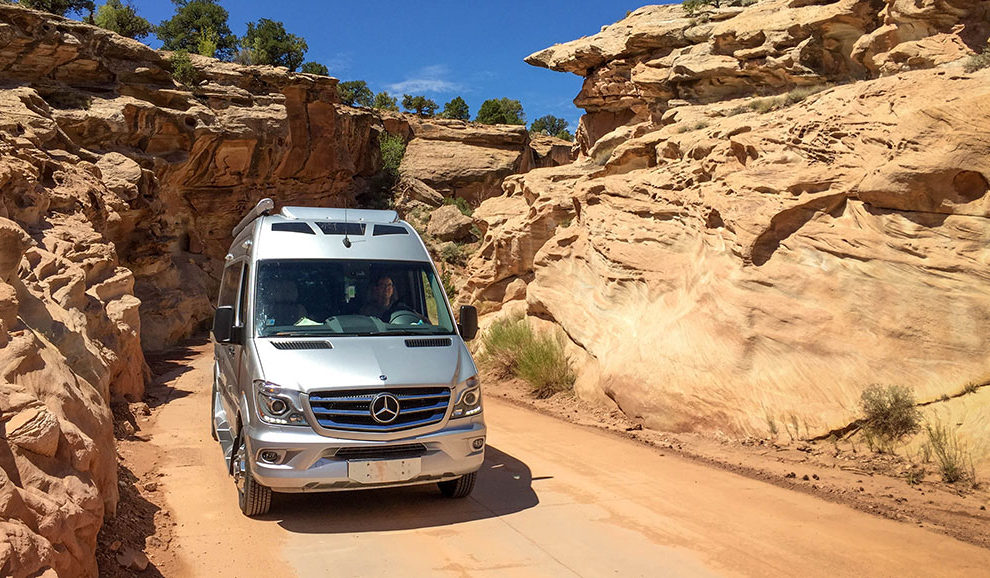
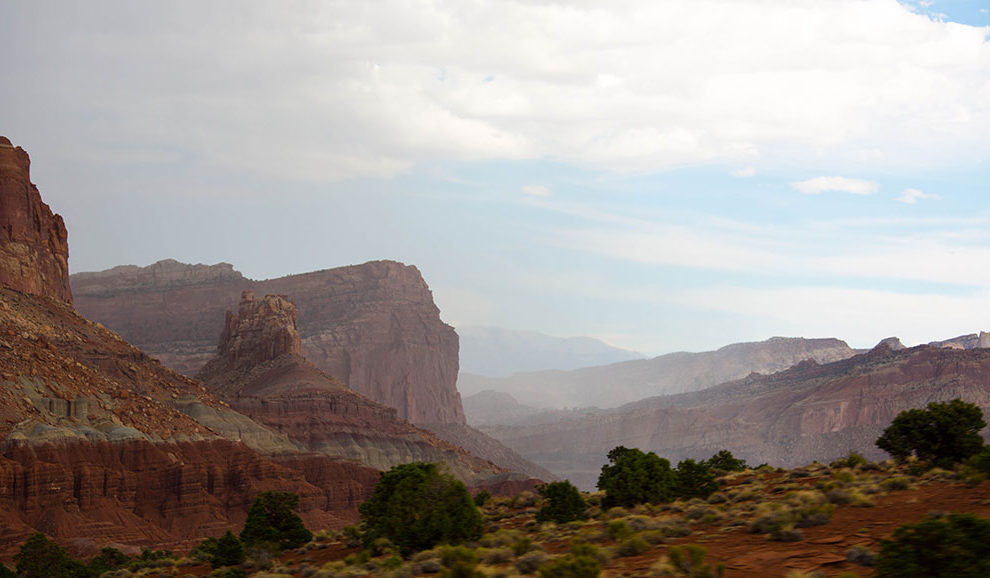
I knew nothing of the Waterpocket Fold that extends nearly 100 miles across southern Utah. But once we arrived in Capitol Reef National Park, I was captivated.
Ferns: Green on green in the ancient forest
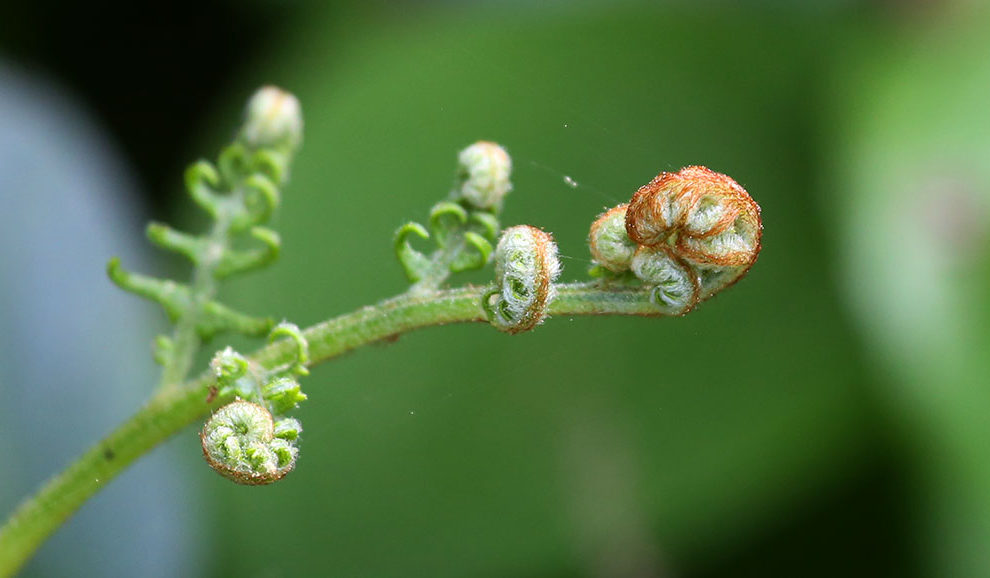 A fern fiddlehead unfolding.
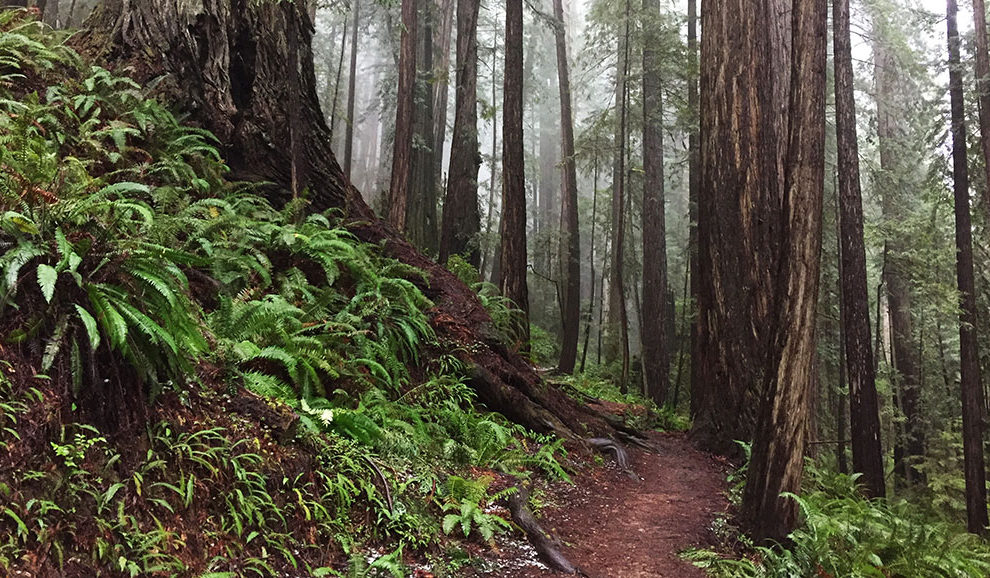
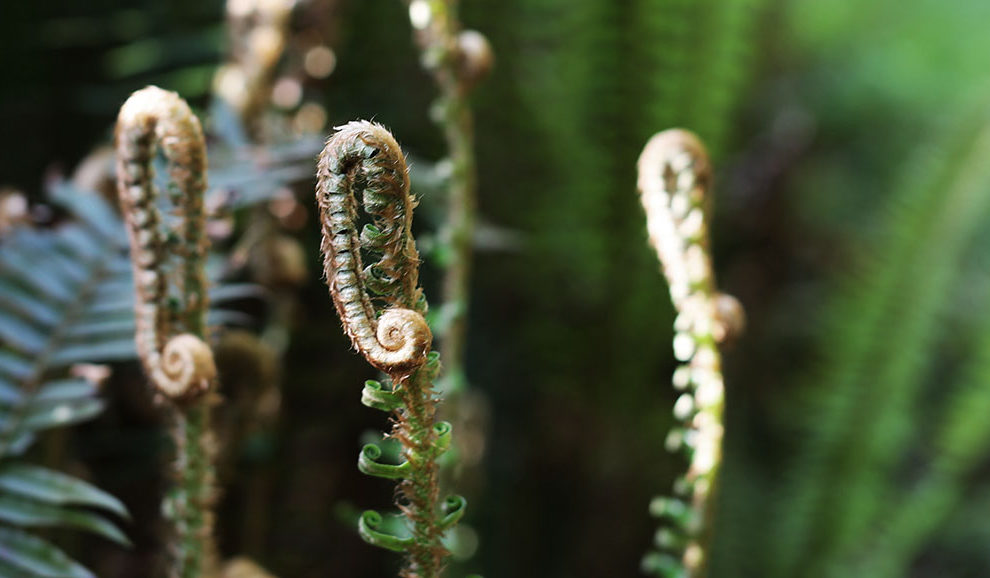
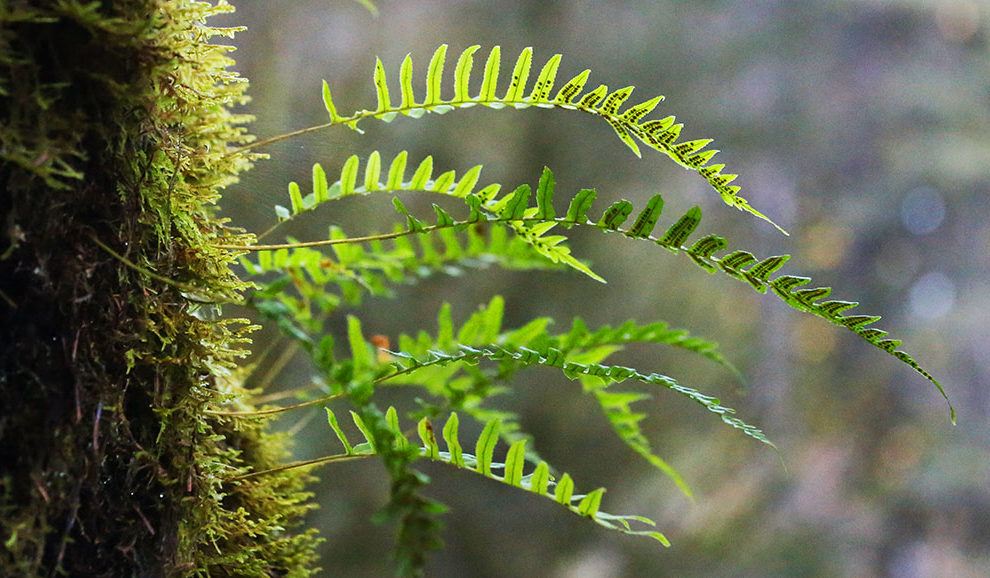
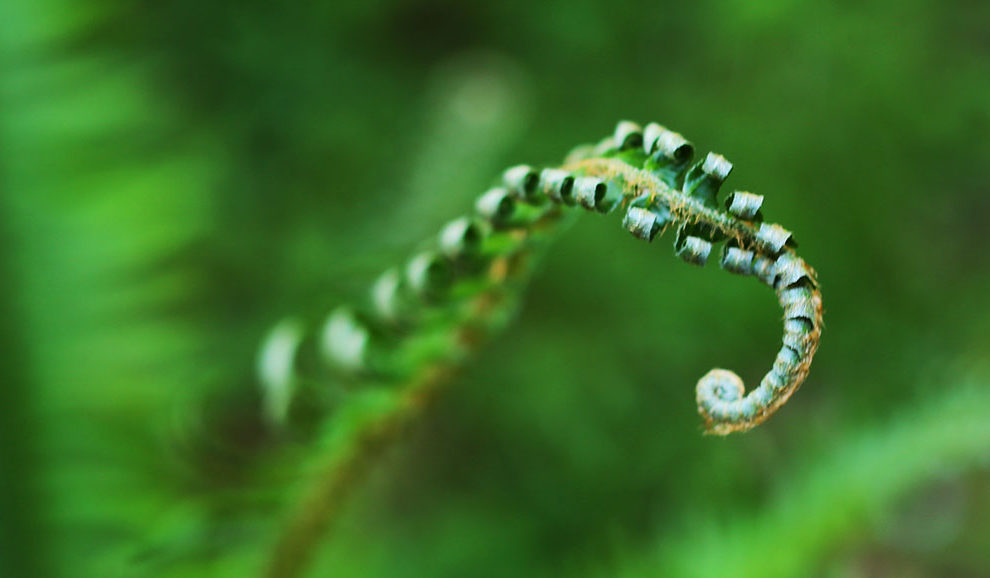
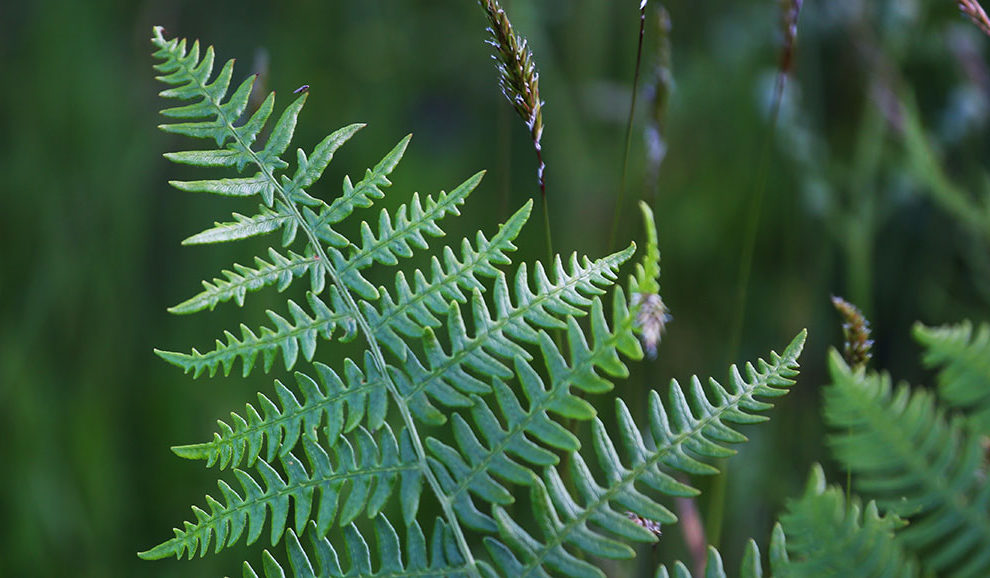
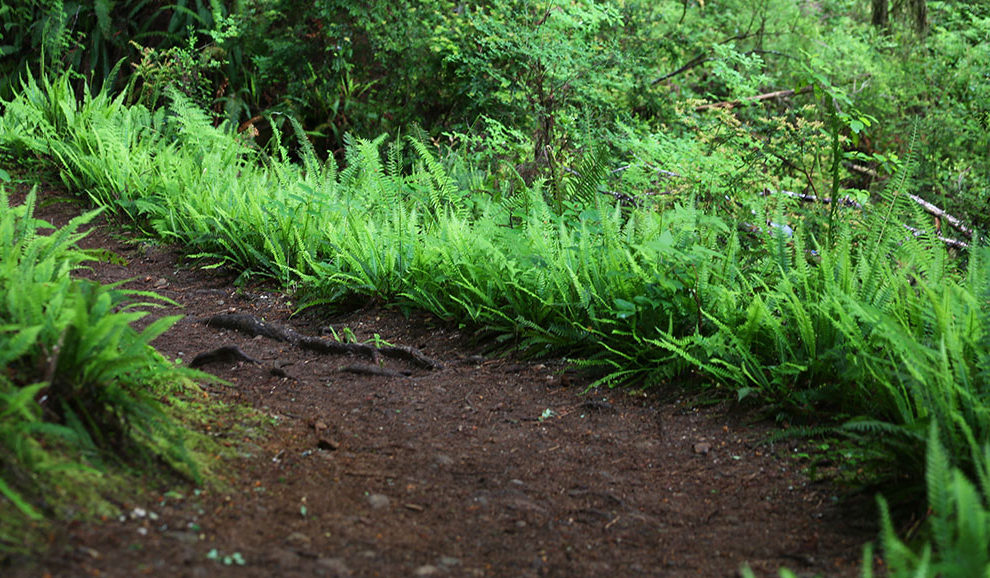
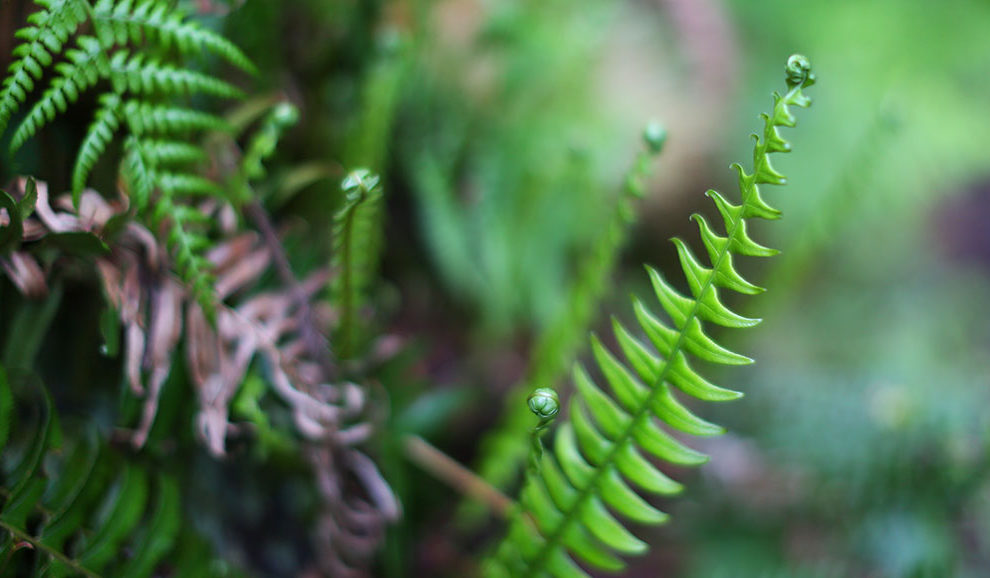
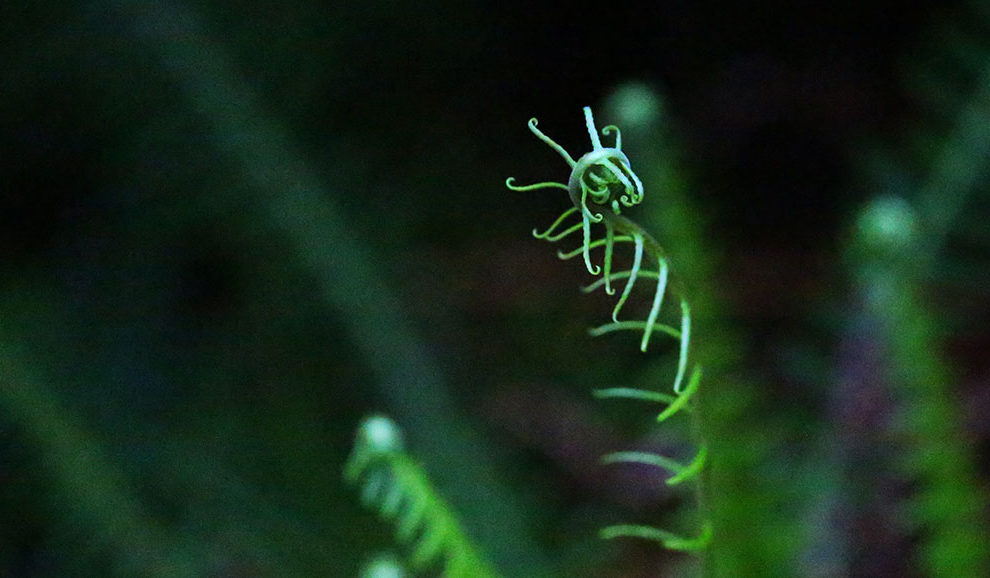
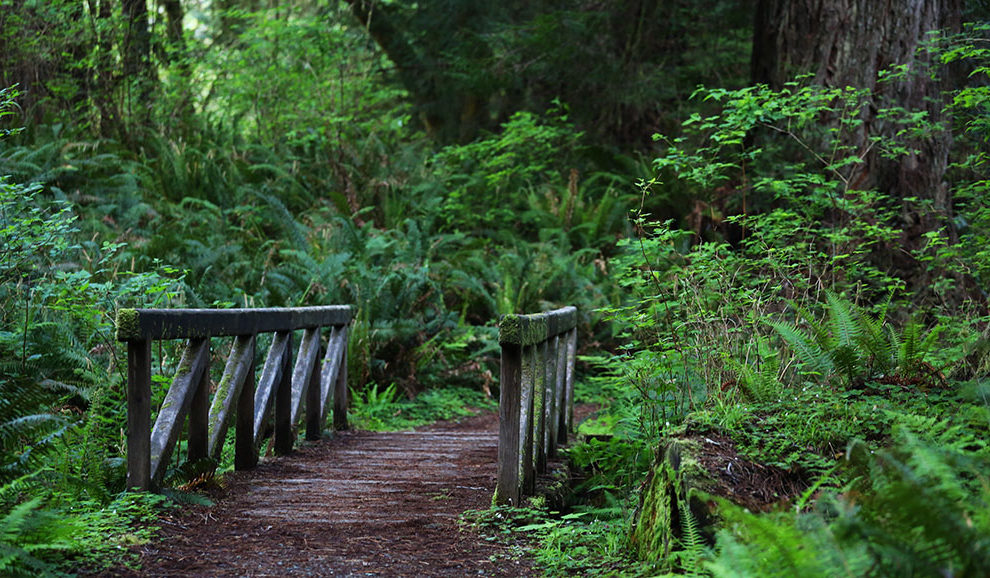
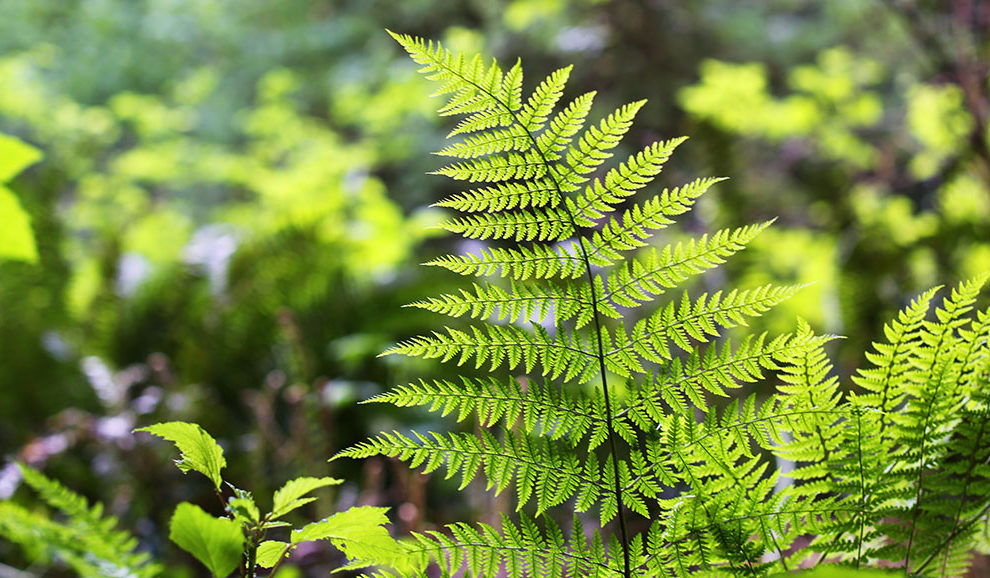
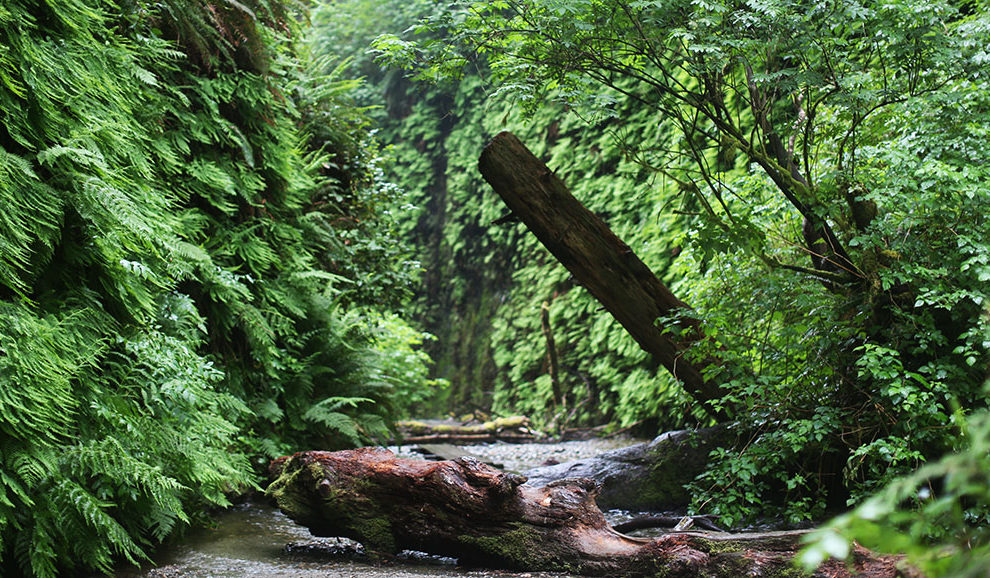
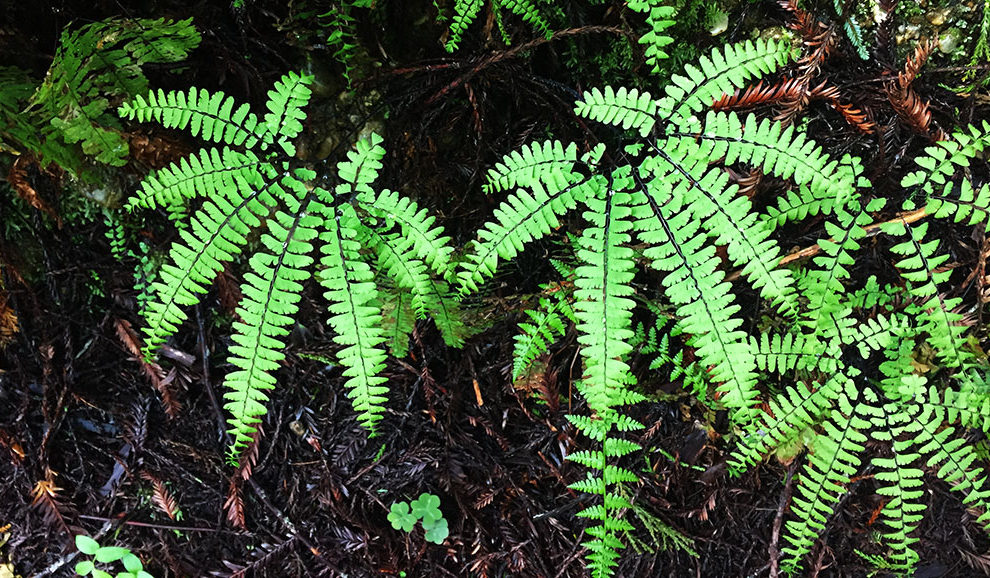
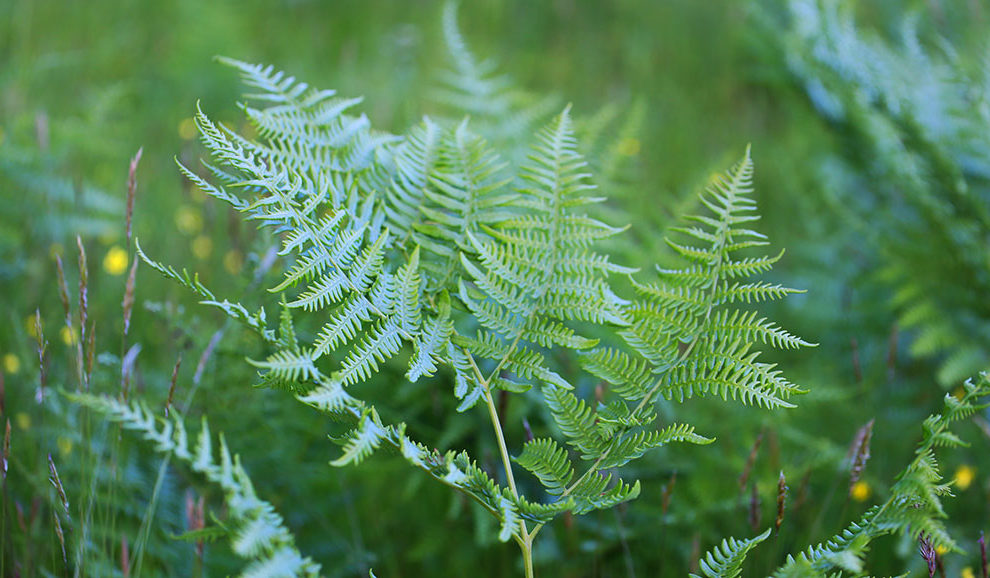
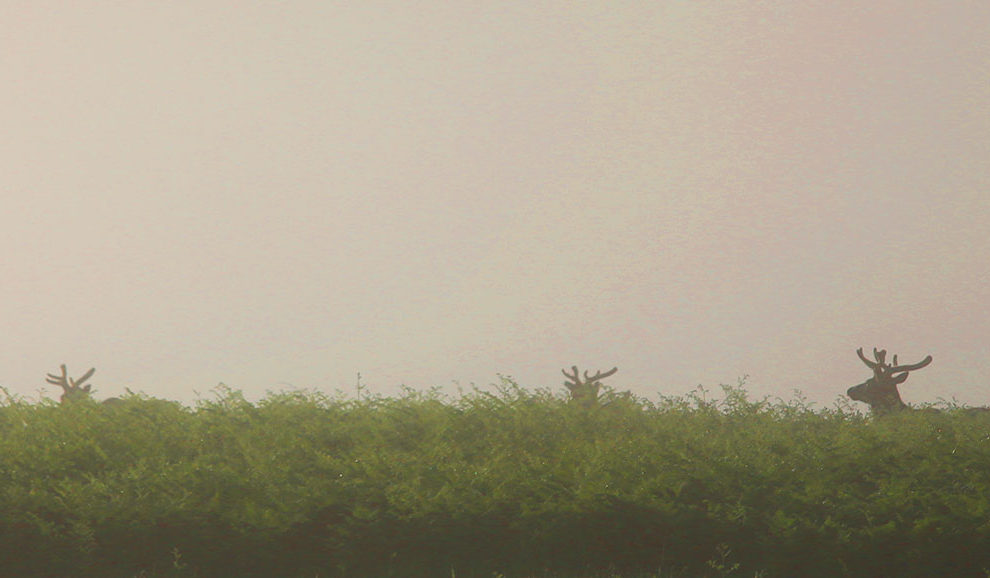
In the ancient forest at Prairie Creek Redwoods State Park in northern California, you walk beneath some of the tallest trees on the planet, immersed in a green-on-green world dripping with ferns, their amazing fiddleheads unfurling in the spring. Ferns cover the forest floor, drape from the branches and trunks of the trees and line the 50-foot walls of the world-famous Fern Canyon.
Waist-high sword ferns surround our campsite, delicate deer fern and lacy lady fern line the sides of the trails. The deer fern has two types of fronds, sterile ones with broader leaflets, and reproductive fronds with much narrower leaflets that contain spores on their undersides.
Leather fern form mats in the redwood canopy, creating hanging gardens with up to six feet of soil and blooming blackberry bushes. Bracken ferns cover the prairie, nearly hiding the reclining elk munching there. And in Fern Canyon, a World Heritage site and an International Biosphere Reserve, five-finger ferns flutter from canyon walls.
Guests welcome: Marshmallows, Marbled Murrelets, Fern Canyon, scotch
- Corbin sitting in his very cool trailer.
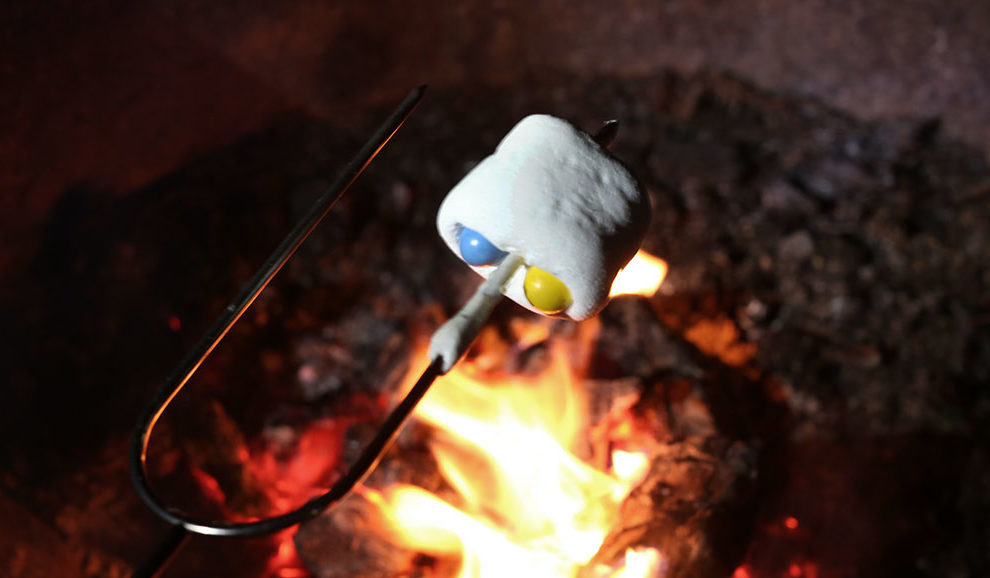
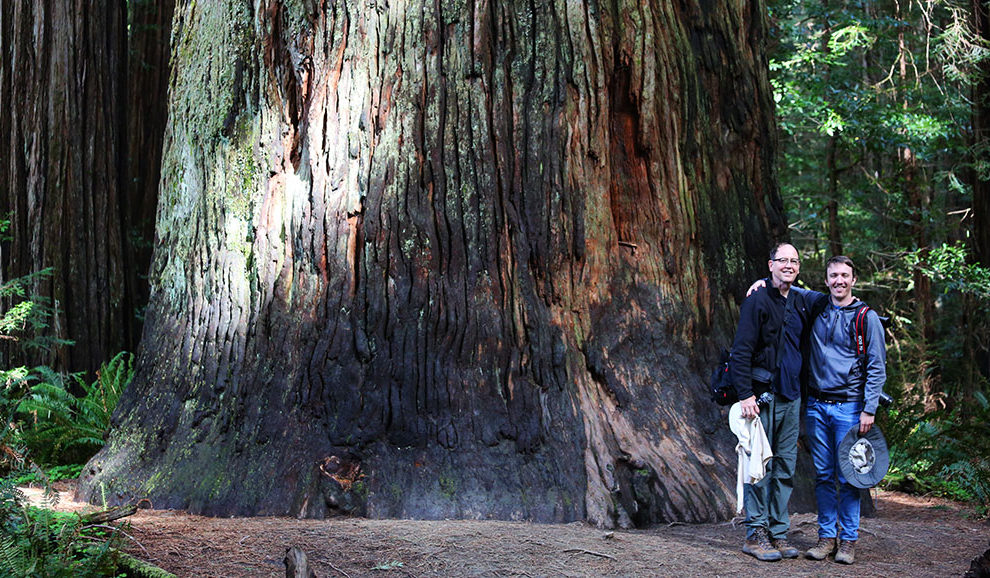
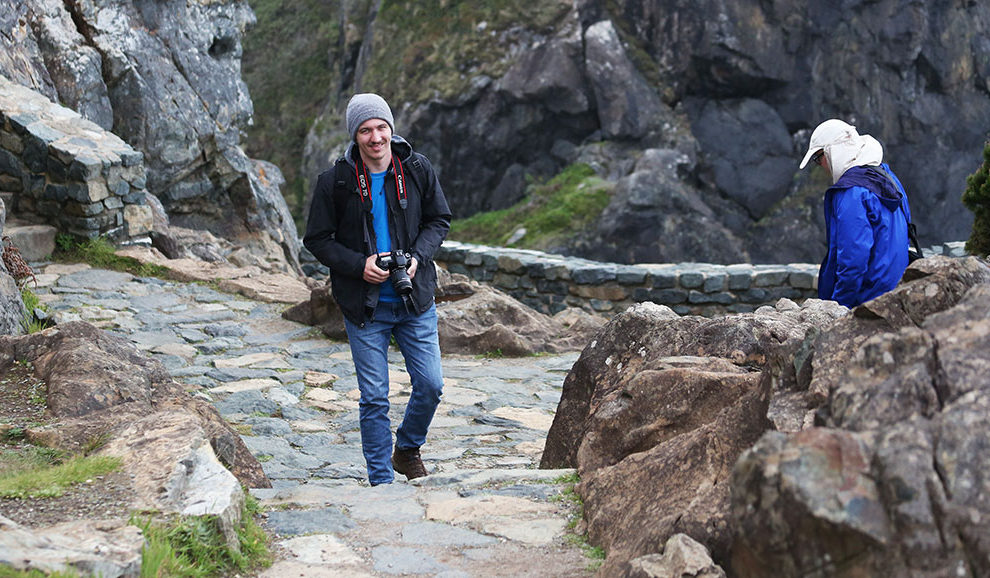
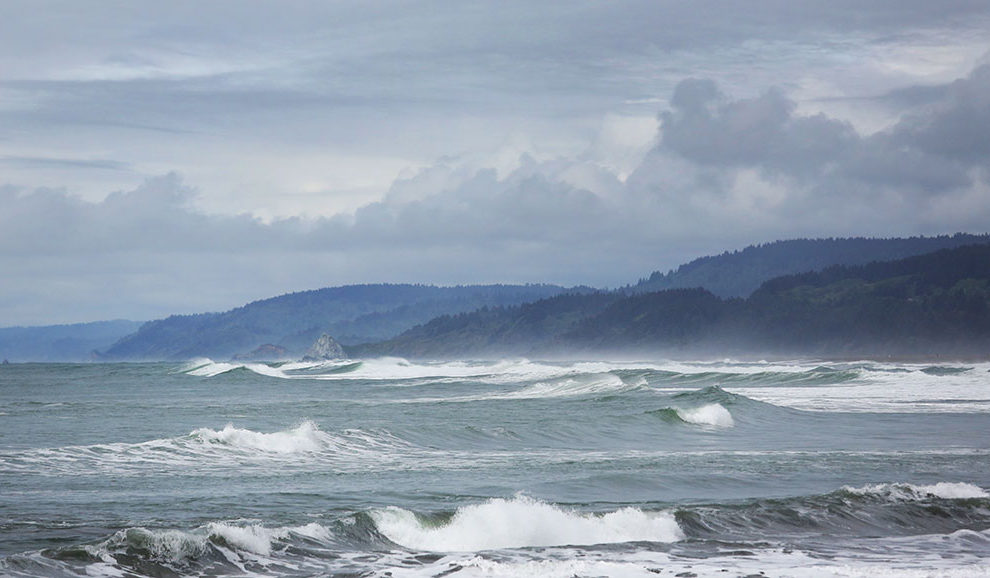
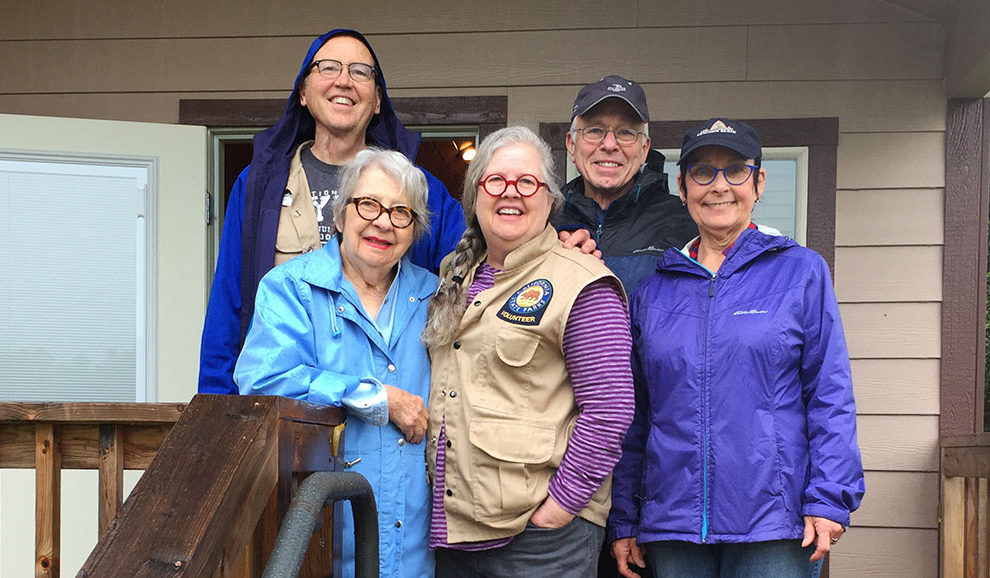
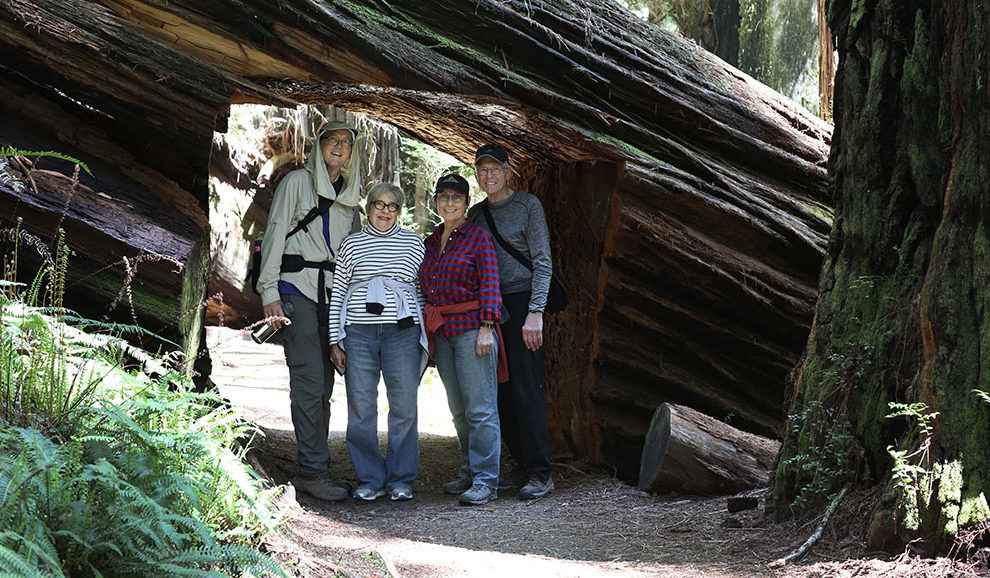
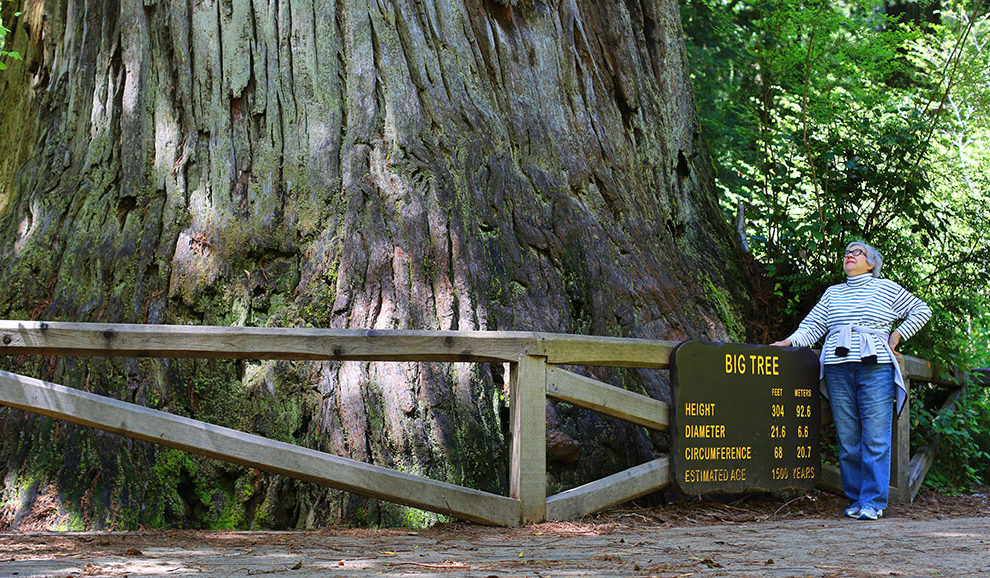
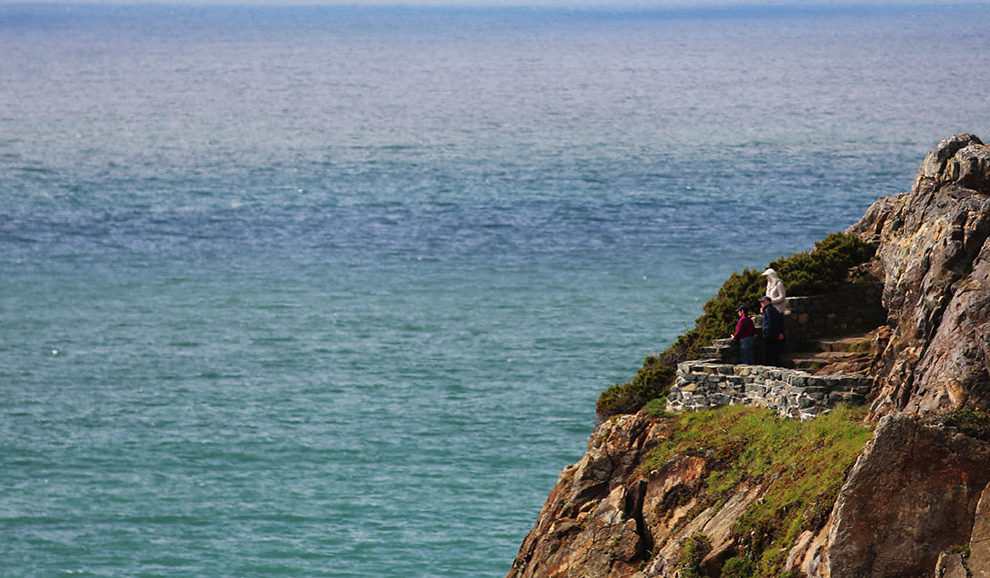
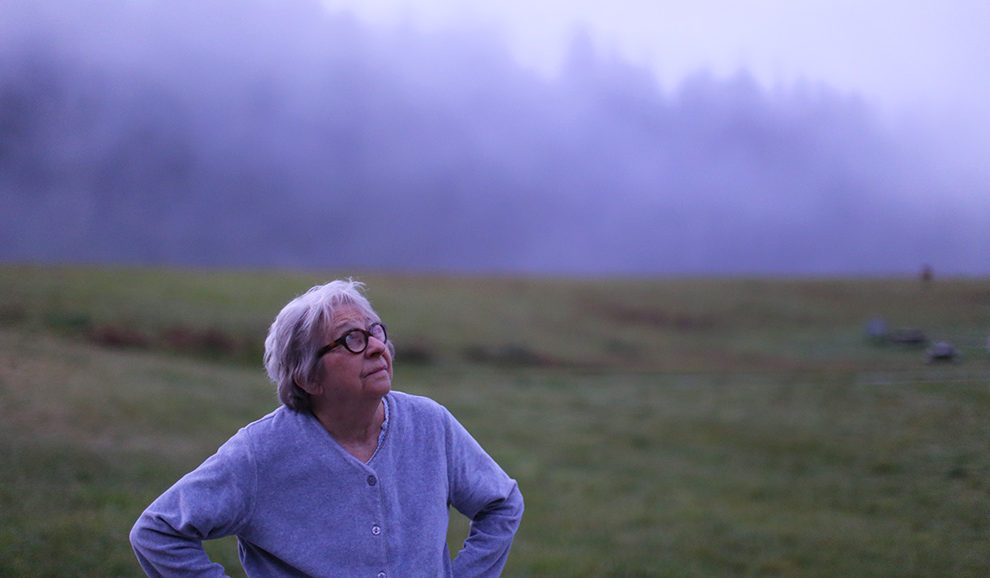
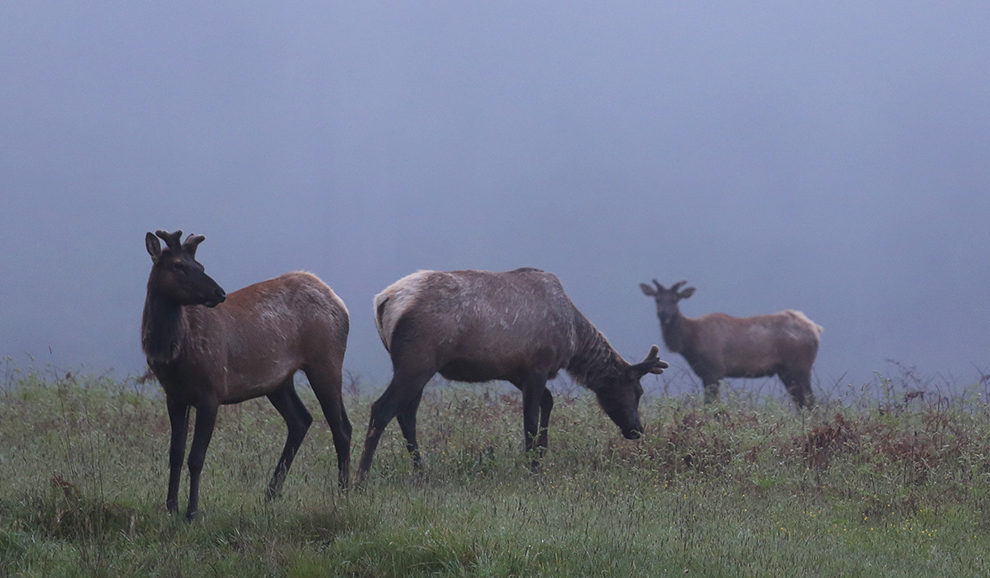
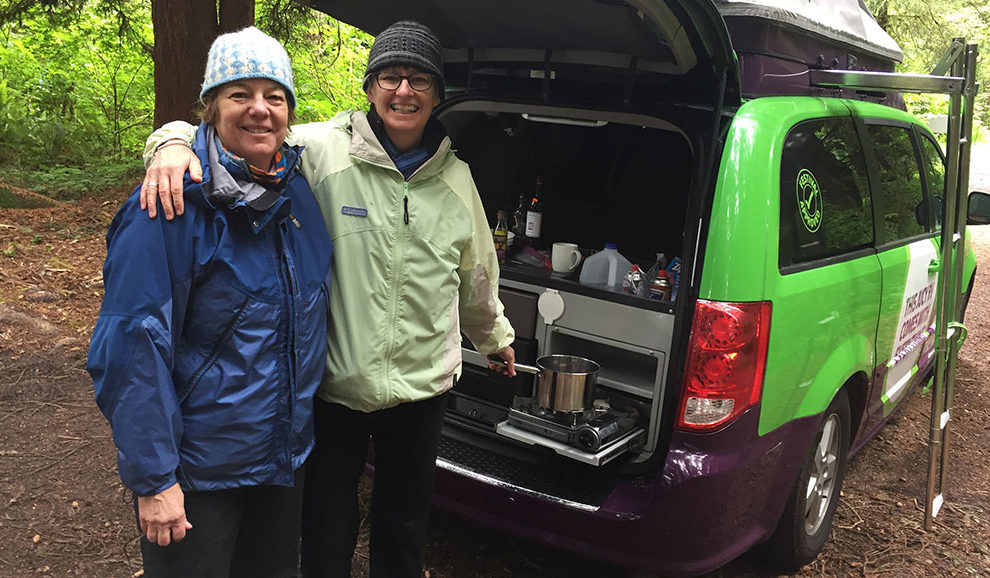
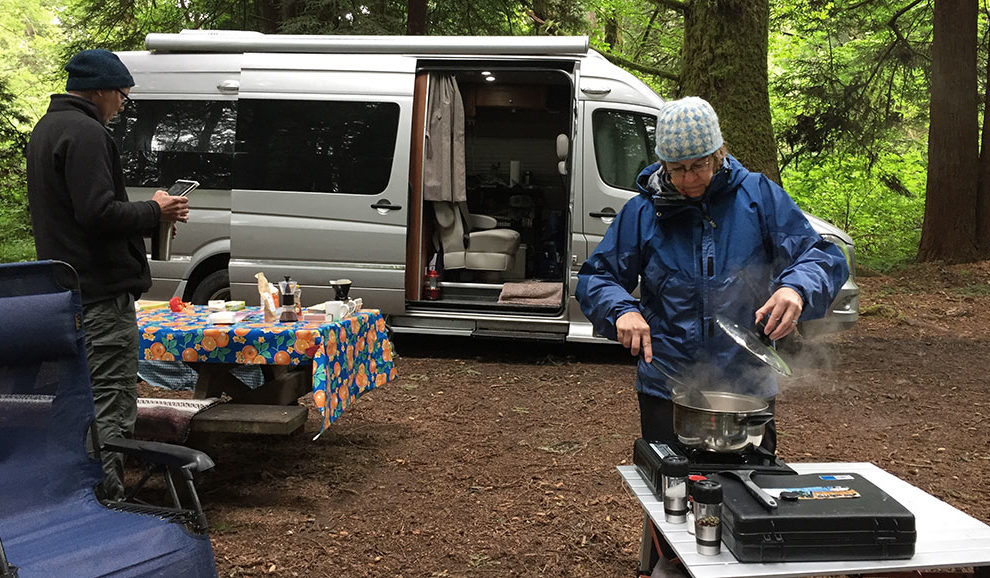
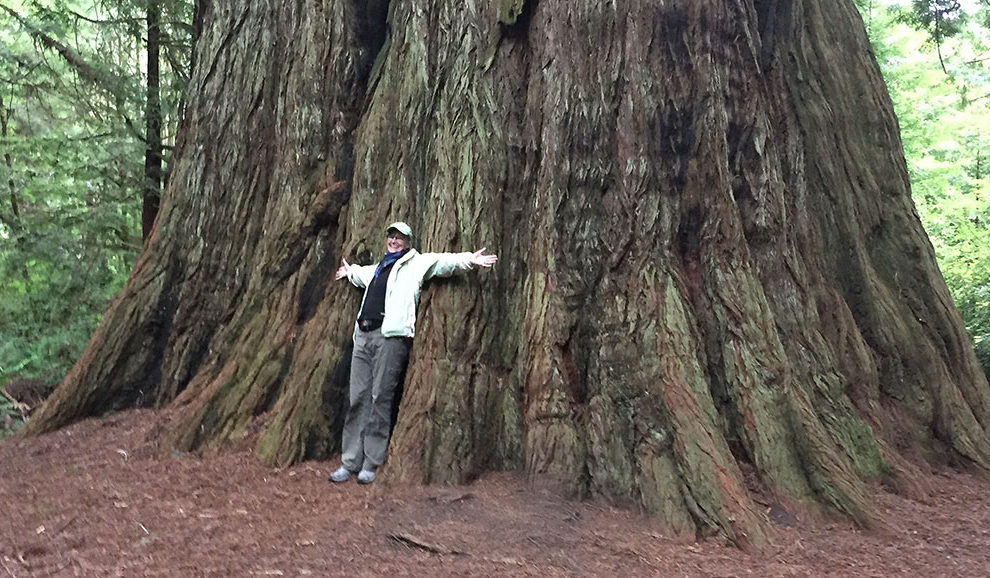
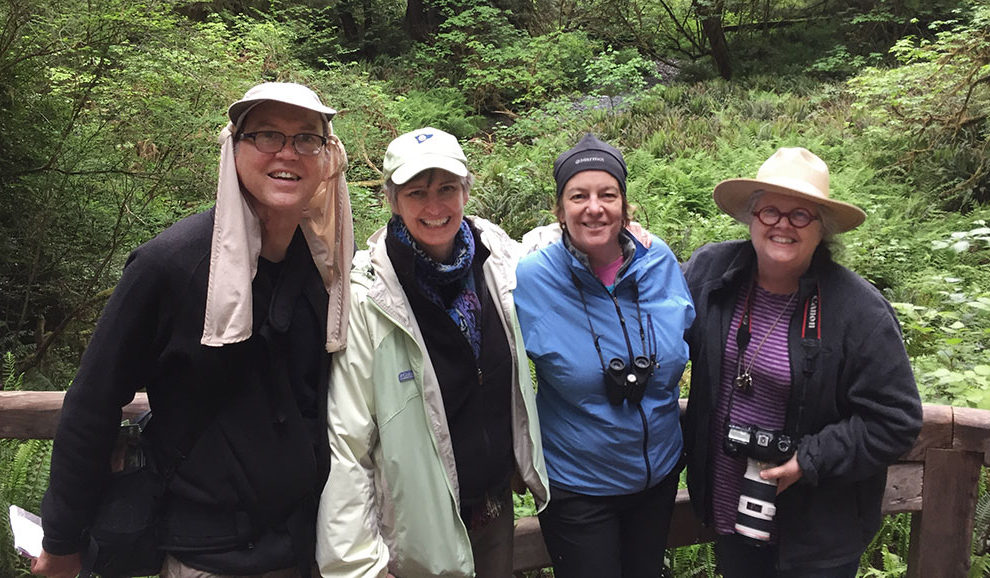
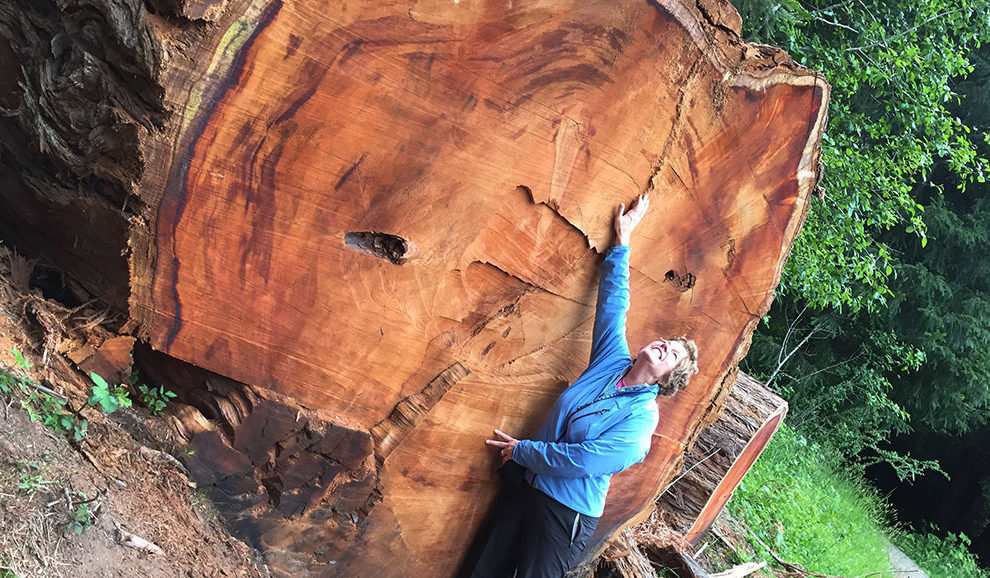
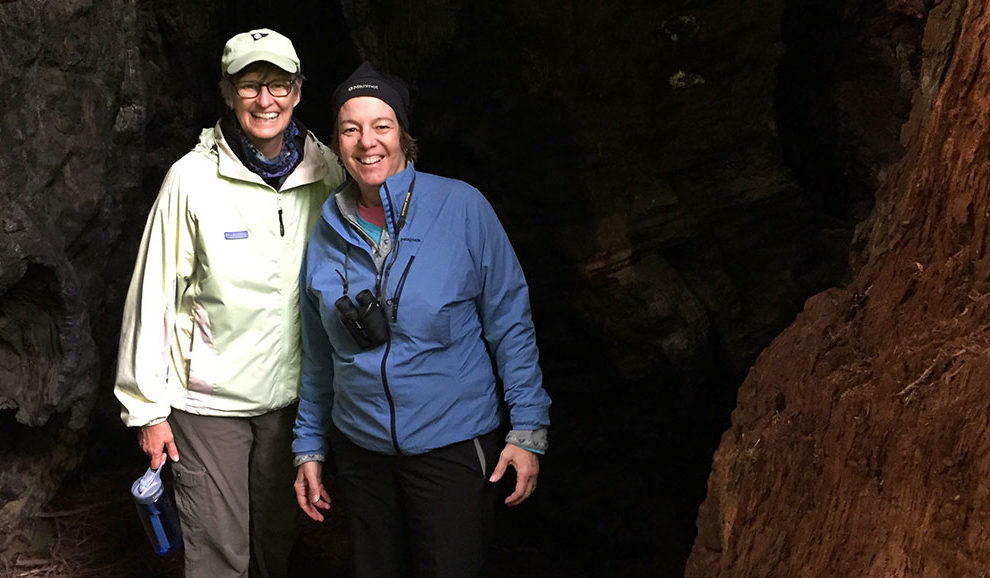
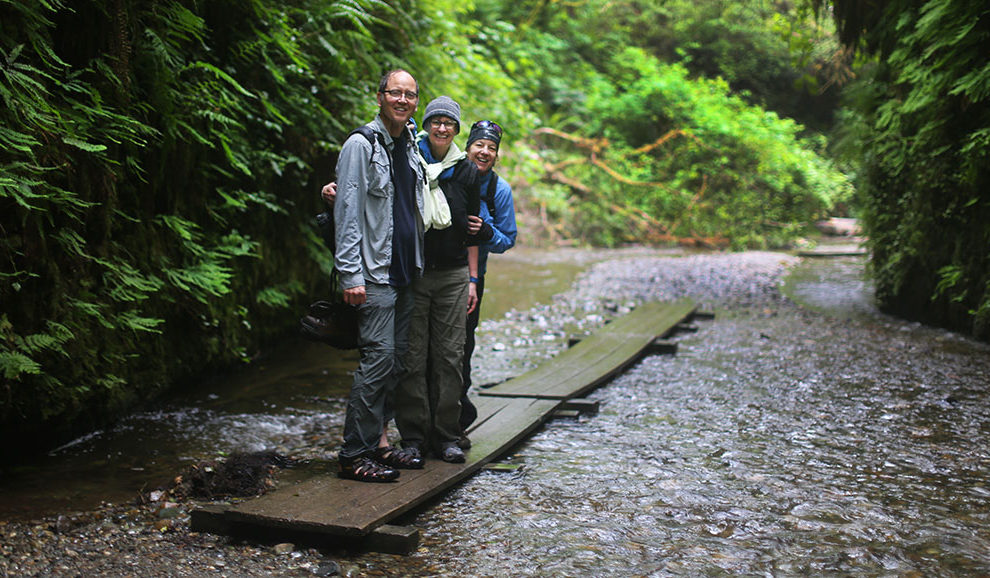
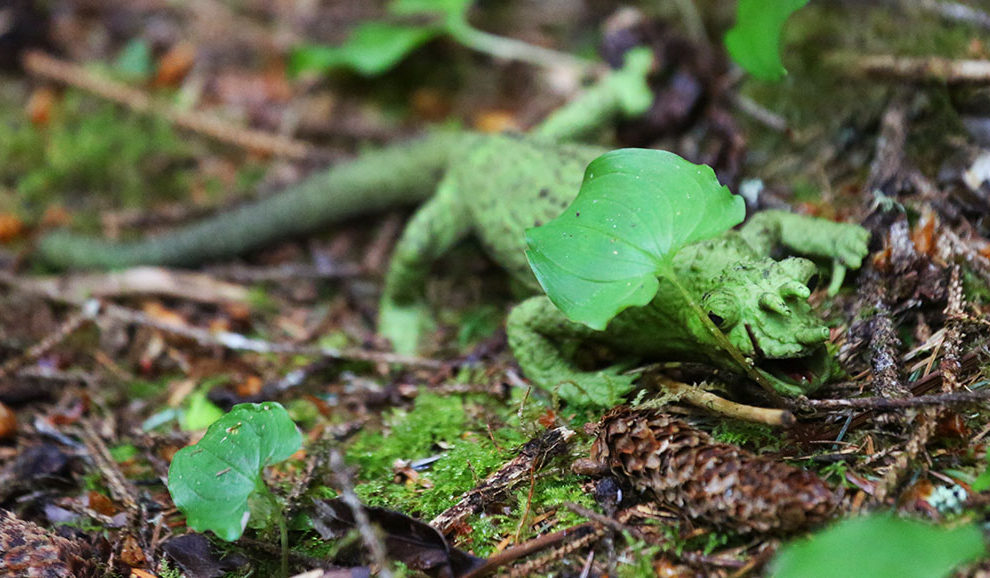
Who says nomads can’t have house guests, or Epic Van guests, or actually, campsite guests. Just because we don’t have a house, or extra beds, doesn’t mean we can’t have people “over.”
In the three months that we were volunteering at Prairie Creek Redwoods State Park, we had three sets of guests. First, Corbin, one of our son, Nate’s, former college roommates, stopped by for almost two weeks in his months-long tour of the West, then my mother, step-brother and sister-in-law, came for four nights, then my former colleague and always friend, Jen, and her partner, Reg, came for four nights.
We loved all of them, and each visit was unique. They enriched our sometimes solitary lifestyle. And they brought a feeling of home to our traveling abode.